Government of Ireland Scholarships 2026 | Application Process
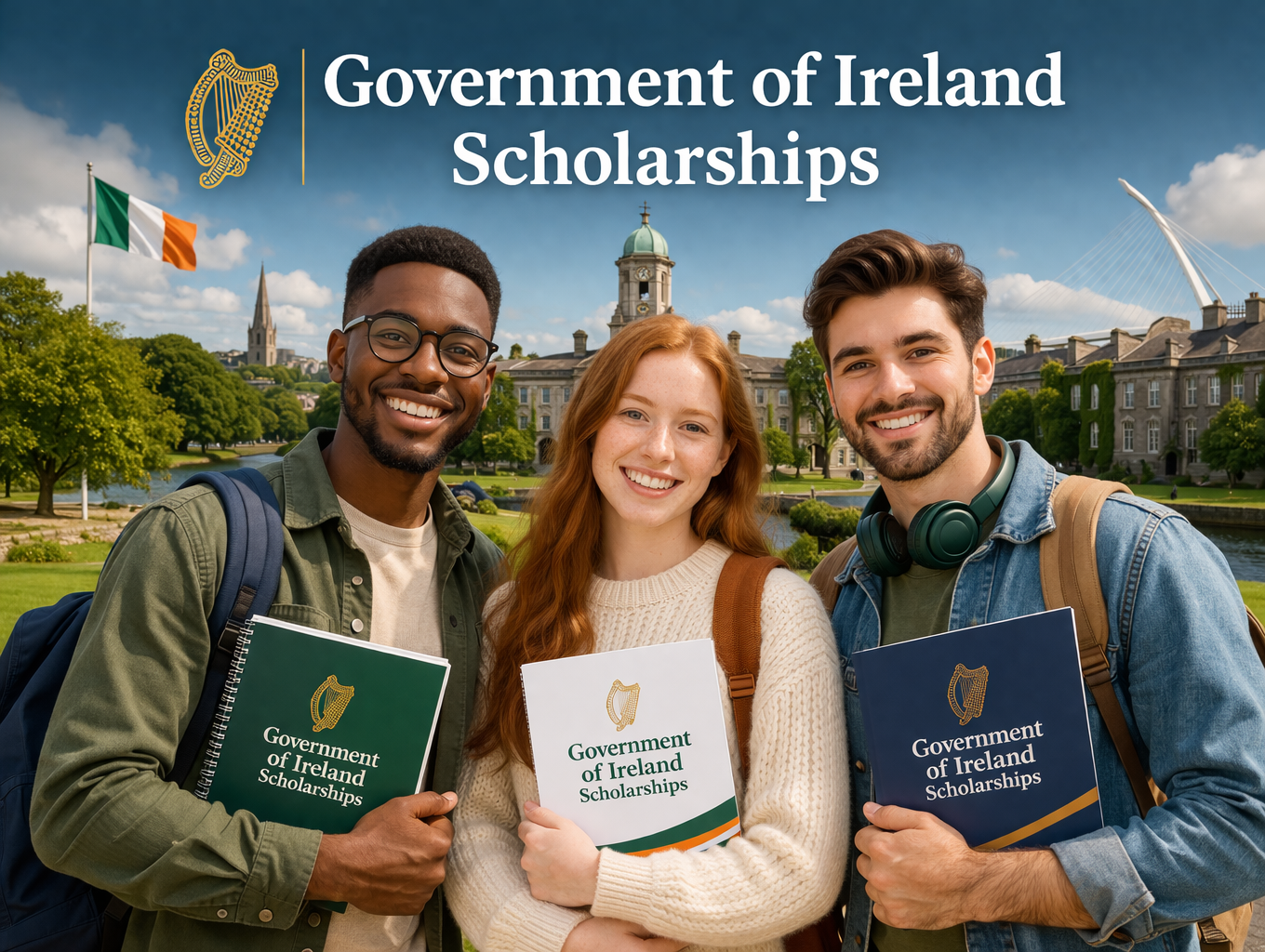
If you have been looking for a fully funded scholarship to study in Europe, the Government of Ireland Scholarships might be exactly what you need. This is one of the most respected and competitive scholarship programs available to international students today, and it opens doors to some of Ireland’s finest universities without the burden of tuition fees or living costs. In this article, we will walk you through everything you need to know, from the basics of the program all the way to how you can submit a strong application.
What Are the Government of Ireland Scholarships?
The Government of Ireland International Education Scholarship program, often referred to as GOI-IES, is a prestigious initiative designed to attract high-achieving international students to Ireland for postgraduate study. The program is funded by the Government of Ireland and managed by the Higher Education Authority (HEA) in close partnership with Irish higher education institutions across the country.
Each year, 60 scholarships are awarded to outstanding students from countries outside the European Union and European Economic Area. The scholarship covers one year of full-time study at the master’s, postgraduate diploma, or PhD level. It is open to students from all fields of study, which makes it one of the most inclusive government-funded scholarship programs in the world.
The program was originally established under Ireland’s International Education Strategy 2010-2015 and has since grown significantly under successor national strategies, including the Global Citizens 2030 plan. Today it stands as one of the flagship programs through which Ireland builds long-term academic and cultural ties with partner countries across Africa, Asia, Latin America, and beyond.
Key Details at a Glance
Before diving into the finer details, here is a quick overview of the most important information about the Government of Ireland Scholarships for the 2026/27 academic year.
Host Country: Ireland
Program Level: Masters, Postgraduate Diploma, and PhD
Number of Scholarships: 60 scholarships per year
Duration: One academic year (full-time)
Funding Type: Fully funded
Eligible Fields: All disciplines
Administering Body: Higher Education Authority (HEA)
Application Deadline: 12 March 2026 at 5:00 PM Irish time
Results Announcement: Early June 2026
Scholarship Benefits: What Do You Get?
One of the biggest questions students have when they first hear about the Government of Ireland Scholarships is how much financial support they actually receive. The answer is quite generous, and for students coming from countries with weaker currencies, it can make a life-changing difference.
Every successful GOI-IES recipient gets a stipend of 10,000 euros for one year of full-time study. This is meant to help with living costs, including accommodation, food, transportation, and other daily expenses. Ireland’s cost of living can be significant, especially in Dublin, so this stipend goes a long way toward making your stay comfortable and sustainable.
On top of the stipend, the host Irish higher education institution is required to provide a full tuition fee waiver for the duration of the scholarship. This means that your international student tuition fees, which can run very high at Irish universities, are completely covered. In some cases, this fee waiver also includes registration charges, which adds even more value to the award.
As a Government of Ireland scholar, you are also recognized as a representative of your home country and an ambassador for Irish education globally. This recognition carries real professional weight and can enhance your CV significantly when you return home or pursue further opportunities internationally.
It is important to note that the scholarship applies to one academic year only, even if your overall degree program is longer in duration. For PhD students who are partway through a multi-year program, only one year of study will be funded under this particular award.
Government of Ireland Postgraduate Scholarship Programme (A Separate Track)
It is worth clarifying that the Government of Ireland actually runs two distinct scholarship programs that sometimes get confused with each other. The GOI-IES discussed above is one. The other is the Government of Ireland Postgraduate Scholarship Programme, which is managed by Research Ireland (formerly the Irish Research Council).
This second program focuses more on research-based postgraduate candidates who are affiliated with an eligible Irish research body. The value of this scholarship can reach up to 34,000 euros per year and includes a stipend, a contribution toward fees of up to 5,750 euros per year, and up to 3,250 euros in direct research expenses. This is a different pathway with its own eligibility criteria and application process, so make sure you know which one suits your situation before applying.
For most international students reading this article, the GOI-IES program is the one to focus on, as it is broader in scope and open to students from all academic disciplines without requiring prior affiliation with a research institution in Ireland.
Eligible Irish Universities and Institutions
The Government of Ireland Scholarships are not tied to a single institution. Instead, they can be held at a wide range of participating Irish higher education institutions. Some of the most well-known eligible universities include:
- Trinity College Dublin (TCD)
- University College Dublin (UCD)
- University College Cork (UCC)
- University of Galway
- University of Limerick (UL)
- Dublin City University (DCU)
- Maynooth University
- Technological University Dublin (TU Dublin)
Each institution has its own list of eligible programs, and not every course at every university qualifies for the GOI-IES award. This is an important point. Before you even begin preparing your scholarship application, you need to visit the website of your preferred institution and confirm that your chosen course is on the approved list for the 2026/27 academic year. The HEA also publishes this information in Appendix 1 of the official Call Document each year.
Some universities, like Trinity College Dublin, have additional eligibility criteria layered on top of the general program requirements. For example, Trinity requires that GOI-IES applicants be from a World Bank classified Low or Lower-Middle Income Country, in addition to the standard eligibility rules. So it is worth checking the specific terms at your chosen institution carefully.
Eligibility Criteria: Who Can Apply?
The Government of Ireland Scholarships have a fairly clear set of eligibility conditions. Here is a breakdown of the main requirements you need to meet before applying.
Nationality and Domicile
To be eligible, you must have a domicile of origin outside the EU/EEA, Switzerland, and the United Kingdom. This means that the scholarship is designed specifically for students from countries in Africa, Asia, the Americas, the Middle East, and other regions outside Europe. If you are a citizen of an EU or EEA country, you are not eligible for this particular program.
Additionally, applicants who are Russian or Belarusian nationals are not eligible to apply under the current rules for 2026.
Residency Requirement
You must have been continuously resident outside the EU, EEA, United Kingdom, and Switzerland for at least three of the past five years. This requirement is in place to ensure the scholarship reaches students who are genuinely based in non-European countries, rather than those who may have already relocated to Europe for other reasons.
Offer of Admission
One of the most critical requirements is that you must already have a conditional or final offer of admission from an eligible Irish higher education institution before you submit your scholarship application. This means the process has two stages: first, apply to your chosen Irish university and get an offer; second, apply for the GOI-IES scholarship using that offer as part of your documentation.
Getting an offer first is not just a formality. Some universities prioritize applicants who hold final, unconditional offers during the internal shortlisting process. So the sooner you secure your university admission, the better positioned you will be for the scholarship competition.
Program Level
The scholarship is only available for full-time study at NFQ Levels 9 or 10. In practical terms, this means master’s programs, postgraduate diploma programs, and PhD programs. Undergraduate students cannot apply for the GOI-IES.
Previous Award
Candidates who have previously received a Government of Ireland International Education Scholarship are not eligible to apply again. The program is designed to support new beneficiaries each year.
Academic Qualifications
While the general GOI-IES program does not specify a minimum grade requirement at the program level, most Irish universities will expect you to have a strong academic record. For the Government of Ireland Postgraduate Scholarship Programme (the research track), you must hold a first-class or upper second-class honors bachelor’s degree or its equivalent from a recognized institution.
Required Documents for the Application
Preparing your documents well in advance is one of the best things you can do to give yourself a strong shot at this scholarship. Here is what you will typically need to submit through the GOI-IES online application portal.
- Proof of Admission: A conditional or final offer letter from an eligible Irish higher education institution, clearly showing that it is for the 2026/27 academic year.
- Academic Transcripts: Official academic records from all previous higher education institutions you have attended, showing your grades and qualifications.
- Academic Certificates and Degrees: Copies of your degree certificates or graduation documents.
- Personal Statement: A written statement explaining your academic background, your reasons for choosing to study in Ireland, and how the scholarship aligns with your long-term goals both personally and professionally.
- CV or Resume: A current curriculum vitae showing your educational history, research experience, work experience, extracurricular activities, and any awards or achievements.
- Two Academic References: Two references must be uploaded directly through the online portal by your referees. The HEA does not accept references submitted through any other channel. References carry 15 out of 100 marks in the assessment process, so choosing referees who know your work well and can write convincingly about your potential is very important.
- English Language Proficiency Evidence: If English is not your first language, you will need to provide proof of proficiency through accepted tests such as IELTS, TOEFL, or similar qualifications.
- Passport or National ID: Proof of your identity and nationality.
All documents must clearly relate to the 2026/27 academic year. Once you submit your application, no changes can be made, so review everything thoroughly before clicking submit.
Selection Process: How Are Scholars Chosen?
The selection process for the Government of Ireland Scholarships is competitive and multi-staged. Understanding how it works can help you prepare a much stronger application.
Stage One: HEA Review and HEI Shortlisting
After the application deadline passes, the HEA first checks all submissions for basic eligibility. Applications that pass this check are then shared with the relevant host institutions. Each Irish university reviews the applications that have been assigned to them and shortlists candidates based on alignment with that institution’s strategic objectives, as well as the quality of the application overall.
Stage Two: Independent Assessment Panel
Shortlisted applications move on to be evaluated by an independent panel of assessors. This panel uses a marking scheme out of 100 points to score each application. The breakdown is roughly as follows:
- Academic qualifications, achievements, and relevant work experience: 40 marks
- Personal statement covering benefits to the student, to Ireland, and to the home country: 45 marks
- Two academic references: 15 marks
Candidates must score a minimum of 60 out of 100 to be considered for an award. The panel looks for academic excellence, clarity of purpose, potential for long-term impact, and a compelling case for why studying in Ireland is the right step for the applicant’s goals.
Stage Three: HEA Final Approval
After the independent panel completes its assessment, the HEA reviews the results and makes the final scholarship decisions. Successful applicants receive an official award letter from the HEA and are expected to use the scholarship for the specific institution and program for which they applied.
Results are typically announced in early June 2026. Candidates may receive updates at various stages of the process, including after the HEI shortlisting phase.
How to Apply for the Government of Ireland Scholarships: Step-by-Step
Applying for the GOI-IES program involves a clear sequence of steps. Here is the process broken down in a straightforward way.
Step 1: Choose Your Program and University
Start by identifying a master’s or PhD program at an eligible Irish university that matches your academic background and career goals. Make sure the specific course is on the list of eligible programs for GOI-IES. Contact the admissions office of your chosen institution if you are not sure whether your preferred program qualifies.
Step 2: Apply for University Admission
Apply directly to your chosen Irish higher education institution following their own admissions process and deadlines. There may be an application fee involved. At Trinity College Dublin, for example, the application fee is 55 euros and cannot be waived. University of Limerick charges 50 euros. These fees are not covered by the scholarship itself, so plan for this cost.
Step 3: Secure an Offer of Admission
Once your university application is reviewed, you should receive a conditional or final offer of admission. This offer letter is a required document for your GOI-IES application, so you cannot proceed without it. Apply to the university as early as possible to give yourself enough time to get this offer before the scholarship deadline of 12 March 2026.
Step 4: Prepare Your Scholarship Application
With your university offer in hand, begin preparing your GOI-IES application. The scholarship application portal opened on 29 January 2026. Download the sample application form from the HEA website to use as a guide when preparing your responses. Pay particular attention to your personal statement, as it carries the highest weight in the scoring process at 45 out of 100 marks.
Step 5: Contact Your Referees Early
Reach out to your two referees well in advance and give them clear guidance about the scholarship and what the assessment panel is looking for. Referees need to upload their references directly to the online portal, so make sure they have enough time to do so before the deadline. Last-minute reference requests often result in weaker submissions.
Step 6: Submit Your Application
Submit your completed application through the GOI-IES online portal before 5:00 PM Irish time on 12 March 2026. Do not wait until the last day, as the HEA warns that heavy server traffic on the deadline day can cause technical delays. Once submitted, no edits or withdrawals are allowed, so double-check everything before you hit the button. Only one application per candidate is permitted per cycle.
You can access the official application portal and all supporting documents through the Government of Ireland International Education Scholarships page on the HEA website.
Tips for Writing a Strong Personal Statement
Given that the personal statement is worth nearly half the marks in the scoring process, it deserves careful thought and multiple drafts. Here are some practical tips to help you write a statement that stands out.
First, be specific about why you want to study in Ireland. Generic statements about wanting to study abroad do not impress selection panels. Talk about specific programs, research strengths of your chosen university, or aspects of Irish academic culture that align with your goals.
Second, articulate the benefits clearly across all three dimensions the panel looks for: what the scholarship means to you personally and professionally, how your presence in Ireland will contribute to Irish society and the economy, and how you plan to use what you learn when you return to your home country. This three-part structure is not just recommended, it is essentially the framework the assessors use.
Third, demonstrate that you have done your homework. Mentioning specific faculty members, research centers, or programs at your chosen institution shows genuine interest and preparation.
Fourth, talk about extracurricular activities, leadership roles, or community contributions that show you are a well-rounded candidate. The GOI-IES program values candidates who are active participants in their communities and who show promise as future leaders.
Finally, make sure your English is clear, concise, and free of errors. If writing in English is not your strongest skill, get feedback from a trusted mentor or writing tutor before submitting.
Life in Ireland as a GOI-IES Scholar
Ireland is a wonderful country to spend a year of your academic life. With a long tradition of scholarship, a vibrant cultural scene, and a strong innovation economy, it offers students a rich environment in which to grow both academically and personally.
Dublin, where many of the country’s leading universities are based, is a dynamic city with a young population, a thriving tech sector, and a welcoming attitude toward international students. Cities like Cork, Galway, and Limerick each have their own distinct character and are home to world-class universities as well.
As a GOI-IES scholar, you are expected to reside in Ireland for the full duration of your award. This is both a condition of the scholarship and a genuine opportunity to immerse yourself in Irish academic and social life, build lasting professional networks, and experience a country that punches well above its weight on the world stage in areas like literature, technology, and global policy.
Frequently Asked Questions
Is there an age limit for the Government of Ireland Scholarships?
No. There is no age restriction specified in the GOI-IES program. The scholarship is open to eligible applicants regardless of age, as long as they meet all other requirements.
Can I apply for part-time or distance learning programs?
No. The Government of Ireland International Education Scholarship is only available for full-time, in-person study programs. Part-time and online programs are not eligible.
Can I edit my application after submitting it?
No. Once your application is submitted through the online portal, no changes can be made. This makes it very important to review your application thoroughly before submission.
What if my program lasts more than one year?
The scholarship only covers one year of study, even if your full program is longer. PhD students in the first year of a multi-year program can apply, but only year one will be funded under the GOI-IES award.
Can I apply if I have previously received the scholarship?
No. Previous GOI-IES recipients are not eligible to apply again.
Who do I contact for general questions about the program?
For general program inquiries, you can email the HEA at goi-ies@hea.ie. For institution-specific questions about eligible courses or the shortlisting process, contact the admissions or international office of your chosen Irish university directly.
Final Thoughts
The Government of Ireland Scholarships represent a genuinely exciting opportunity for ambitious international students who want to take their education to the next level. With full tuition coverage, a generous living stipend, and access to some of Europe’s most respected universities, this program offers real value to those who qualify and can put together a compelling application.
The key to success starts early. Apply to your chosen Irish university as soon as you can, confirm the eligibility of your program, start drafting your personal statement well before the deadline, and give your referees plenty of time to write strong, detailed references on your behalf.
If you meet the eligibility criteria, there is every reason to apply. Ireland is a forward-thinking country with a deep appreciation for education and global diversity, and the GOI-IES program is one of the clearest expressions of that commitment.
Ready to take the next step? Visit the official Government of Ireland International Education Scholarships page on the Higher Education Authority website to access the application portal, download the 2026 Call Document, and find the list of eligible institutions and programs for the 2026/27 academic year.
Good luck with your application. Ireland might just be the place where your future begins.