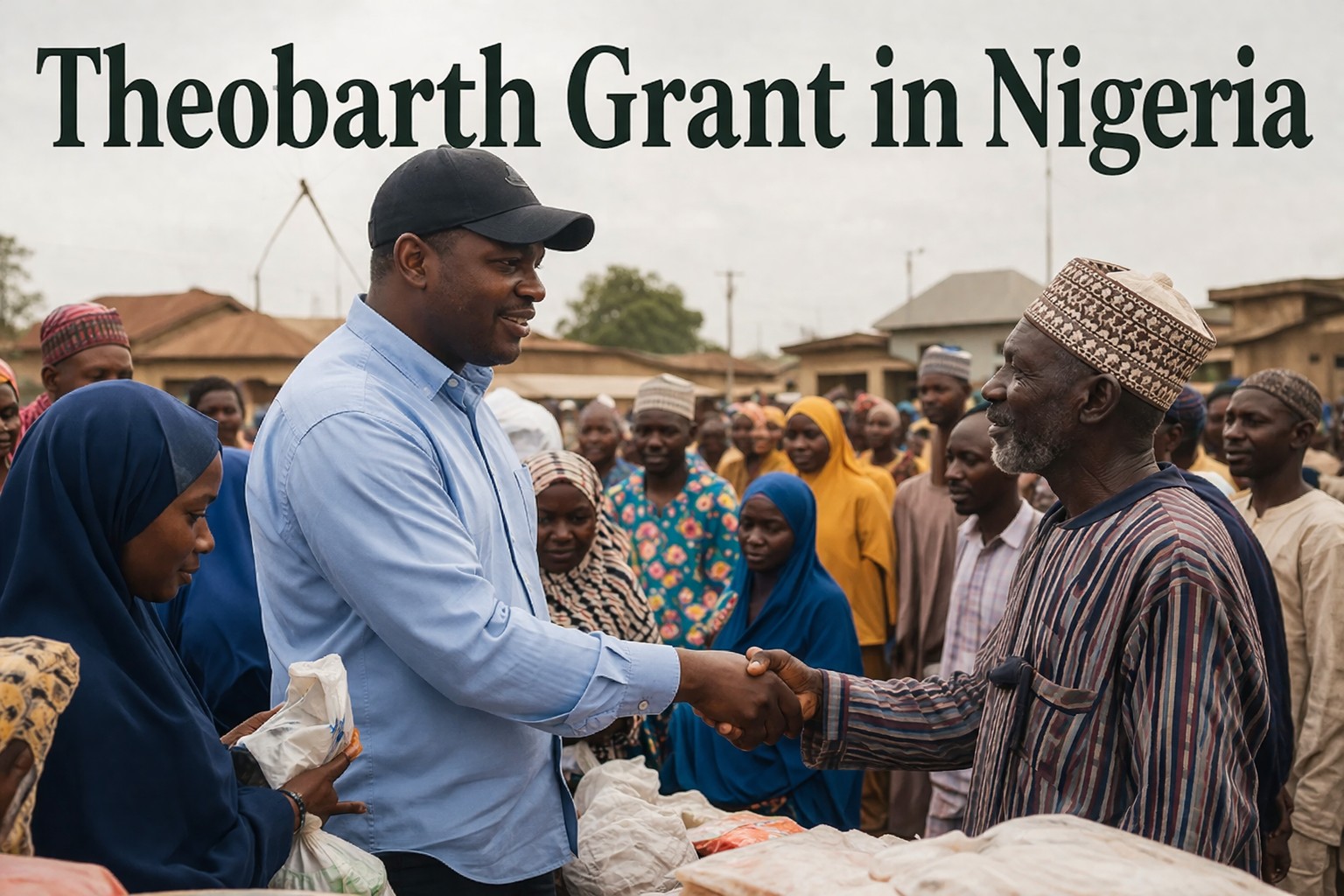
If you have been researching the Theobarth grant in Nigeria, you already know that this topic sparks a lot of emotion. Millions of Nigerians have filled out forms, joined clusters, waited for credit alerts that never came, and kept checking their emails year after year with hope in their hearts. Others have heard the name for the first time and are curious about whether it is worth their time.

This article is going to give you a completely honest and thorough breakdown of everything that is known about the Theobarth Global Foundation grant in Nigeria. We will cover what the foundation is, who set it up, how the grant program works, who is eligible, the current status of disbursement, the concerns raised by regulatory bodies, and what your next steps should be. By the time you finish reading, you will have a clearer picture than most people searching for this topic online today.
Read every section carefully. There are things here that many other websites either do not mention or deliberately leave out.
What Is the Theobarth Global Foundation?
The Theobarth Global Foundation (TGF) is a non-governmental organization (NGO) that describes itself as an internationally recognized body committed to poverty alleviation in Nigeria and Africa. According to information on its official website, the foundation is registered as a limited liability company in Nigeria, incorporated with the Corporate Affairs Commission (CAC) and recognized by financial regulatory authorities in the country.
The foundation’s stated mission is to ensure the financial stability of poor Nigerians by empowering them through social intervention programs, technology, skill acquisition, adult education, and human development initiatives. Its vision, as stated in official materials, is to help the most vulnerable Nigerian families escape hardship and build better lives for themselves and their communities.
The name behind the foundation is Dr. Apostle Theophilus Oluche Ebonyi, who serves as the Country Director and is often referred to as the public face of the TGF. He is supported by a board of directors and a network of cluster leaders spread across the 36 states of Nigeria and the Federal Capital Territory (FCT) Abuja. These cluster leaders are the people who, in most cases, distribute application forms to the public and manage local groups of applicants.
The foundation prides itself on the tagline “Crushing Down the Walls of Poverty” and positions its grant program as a direct financial intervention for Nigerians who are struggling to meet basic needs. The office address associated with the organization is Suite B6, 1st Floor, Vawa Global, One Man Village, Abuja-Keffi Expressway, Karu L.G.A., Nasarawa State.
What Is the Theobarth Grant and How Does It Work?
The Theobarth Grant is the primary program through which the foundation claims to distribute financial assistance to Nigerians. According to the organization’s materials, ordinary applicants (referred to as beneficiaries) can receive between N550,000 and N1,850,000 to start or grow a small business. NGO partners registered under the foundation are listed as eligible for grants of up to N10 million naira, while cluster heads are said to qualify for up to N5 million naira.
The grant program is structured around a cluster system. A cluster is essentially a local group of applicants organized under a cluster leader in a particular community, local government area, or state. Applicants were expected to join a cluster, fill out a registration form, and receive a TGF ID number as confirmation of their enrollment. The foundation reportedly distributed over 200,000 physical registration forms across the country to begin the empowerment exercise.
Over 300 NGOs are said to have partnered with Theobarth Global Foundation under the grant program. Each NGO was assigned the responsibility of organizing clusters, collecting applications, and eventually receiving funds from the foundation before passing them down to verified beneficiaries. The foundation said it would work with these NGO partners and cluster leaders to ensure that disbursements reach every qualified applicant across the country without discrimination.
The grant is not described as a loan. According to TGF materials, the funds are free, non-repayable, and sourced from international donations, philanthropists, and world financial institutions. Applicants were told that they would receive notification of their qualification status via email and SMS, so they were advised to check both their inbox and spam folders regularly.
Who Is Eligible for the Theobarth Grant in Nigeria?
Based on the information published by Theobarth Global Foundation, the grant is open to a wide range of Nigerians. The program is particularly aimed at people from low-income backgrounds and those in rural communities who have limited access to conventional financial support. The target beneficiaries include:
- Nigerian citizens who are struggling financially and unable to meet basic household needs
- Young people who want to start small businesses but lack startup capital
- Women in rural and semi-urban areas who need financial empowerment
- Micro, small, and medium enterprise (MSME) owners who need business support funding
- Unemployed graduates and school leavers looking for an economic lifeline
- Communities in underserved and rural areas across all 36 states and FCT Abuja
- NGOs and registered community-based organizations working with vulnerable populations
- Individuals who want to apply as cluster heads to help organize local beneficiary groups
The foundation stated that the grant disbursement would be done without discrimination, meaning that no applicant would be treated better or worse based on religion, tribe, gender, or state of origin. This nationwide coverage was one of the main reasons the program attracted so much attention from ordinary Nigerians across all parts of the country.
How to Apply for the Theobarth Grant in Nigeria
There are two main ways to apply for the Theobarth grant, an online method and an offline method through a cluster leader or NGO partner. Here is how each process works:
Online Application
The foundation’s official website serves as the primary digital platform for the grant. To apply online, you are expected to visit the official website and fill out the registration form with the following personal details:
- Your full name
- Your email address (used for receiving qualification notifications)
- Your phone number (linked to a registered cluster where applicable)
- Your state and local government area of residence
- Details about your intended business or use of the grant funds
After submitting the form online, you receive a TGF ID number as confirmation of your registration. The foundation advises applicants to always check both their main email inbox and their spam folder because qualification emails and SMS messages are sent to registered addresses and phone numbers.
You can begin your application by visiting the official Theobarth Global Foundation website to access the registration form.
Offline Application Through a Cluster or NGO
For people who do not have reliable internet access or who prefer a physical process, the offline route is through a local cluster leader or an NGO partner registered under TGF. In this case, you find a cluster in your community, fill out a physical form, and submit your documents to the cluster head. Your information is then supposed to be forwarded to the foundation for verification and processing.
If you are not sure how to locate a cluster near you, you can reach out to the foundation directly by sending an email to their official contact address as listed on their website.
Applying as a Cluster Head or NGO
The foundation also allows individuals such as pastors, church leaders, community leaders, and other individuals to apply to become cluster heads or NGO partners. In this capacity, they would organize local beneficiary groups and eventually receive and distribute grant funds to their members. To apply in this category, interested persons are directed to contact the foundation by email.
The Theobarth Grant Disbursement: What Is the Current Status in 2025?
This is the question that most people want answered, and we are going to be straightforward with you about it.
The Theobarth grant has been circulating in Nigeria for several years now, and the promise of disbursement has been made repeatedly without follow-through. As of 2025, the disbursement situation remains unresolved, and there are very serious concerns that have been raised by Nigerian regulatory authorities.
In early 2025, the foundation announced that it had received funds meant for distribution to its registered NGO partners and instructed all collaborating NGOs to sign a new Memorandum of Understanding (MOU) before the 4th of February 2025 as a precondition for receiving their share of the disbursement. NGOs that met the deadline were told they would begin distributing funds to their verified members within 48 hours of receiving payment. However, credible reports from February 2025 confirm that no verified beneficiaries received funds, and no credit alerts were confirmed by independent sources as being genuine.
Screenshots claiming to show disbursement payments have been circulating in WhatsApp groups and Facebook communities, but investigations carried out by online researchers and other applicants found that at least some of these screenshots were edited and not authentic.
The delays have been attributed by the foundation to various factors over the years, including administrative challenges, issues with NGO compliance, and verification exercises. However, after years of the same explanations with no tangible payouts to the general public, frustration among applicants across Nigeria has grown significantly.
EFCC Investigation and What It Means for Applicants
One of the most important things you need to know about the Theobarth grant in Nigeria is that the Economic and Financial Crimes Commission (EFCC) has been actively investigating this program.
According to available reports, the EFCC commenced an investigation into the Theobarth Global Foundation in 2023. In 2024, Apostle Theophilus Ebonyi, the Country Director of the foundation, was detained by the EFCC in connection with allegations of operating a fraudulent grant scheme. Investigators found that thousands of people across Nigeria and other African countries had made payments in connection with the grant but had received nothing in return.
As of 2025, the matter was reported to be before the courts. No information has been provided about any reimbursement plans for affected applicants. The EFCC investigation is a very significant development and one that every person considering involvement with this program must take seriously.
If you have already paid money in connection with the Theobarth grant and you have not received any benefit, you are encouraged to report your experience to the EFCC. You can do this by visiting their official website or going in person to the nearest EFCC office in your state.
The Issue of “Legal Imposts” and Why It Is a Major Red Flag
One of the clearest red flags associated with the Theobarth grant program is the practice of charging what the foundation calls “legal imposts.” On the official TGF website and related materials, it is clearly stated that grants without legal imposts will not be accepted or processed by any Nigerian bank. The stated fees are:
- Ordinary beneficiaries: N2,900
- Cluster heads: N28,900
- NGO partners: N48,900
This is a major problem. Legitimate grants, whether from NGOs, government agencies, international bodies, or private foundations, never require applicants to pay a fee before receiving their grant. This is a universal principle recognized by all credible grant-making bodies, including the World Bank, the United Nations Development Programme (UNDP), the Tony Elumelu Foundation, and all Nigerian government empowerment programs.
When a program asks you to pay money upfront to qualify for or receive a grant, that is one of the clearest indicators that something is not right. The EFCC investigation into Theobarth is connected precisely to this type of fee collection. Applicants across Nigeria paid these fees in good faith expecting to receive grant disbursements, and the money was not returned when disbursement failed to materialize.
This is not to say that everyone associated with the program has acted in bad faith. Some cluster leaders and NGO partners may themselves have been victims of the same system. But as a potential applicant, you must know this before handing over any money to anyone in connection with this program.
Is the Theobarth Grant Real or Fake?
This is the question at the heart of everything. The honest answer is more complex than a simple yes or no.
The Theobarth Global Foundation is a real registered organization. It has a verifiable CAC registration, a physical address, and a website. The foundation’s vision of empowering poor Nigerians is a legitimate goal that many people genuinely support. There is a real person behind the organization who has made public statements and given interviews about the grant program.
However, the grant disbursement program, as it has operated over the past several years, has produced no verified, independently confirmed payouts to ordinary beneficiaries. The EFCC has investigated the program and detained the organization’s Country Director. The practice of charging application fees is inconsistent with legitimate grant programs. And the ongoing cycle of promised disbursement dates that come and go without any payments has left millions of hopeful Nigerians in limbo.
Based on all available information, you need to approach the Theobarth grant with extreme caution. Do not pay any fees. Do not hand over money to any cluster leader, agent, or coordinator in connection with this program. If you have already registered and are waiting, continue to wait without making any further payments. If you have been asked to pay to receive your disbursement, that request is not legitimate and you should refuse it.
What to Do If You Have Already Paid and Not Received Anything
If you made payments in connection with the Theobarth grant program whether as a registration fee, a legal impost, a cluster head fee, or an NGO validation fee, and you have not received any grant funds, here is what you can do:
- Document everything: Save all receipts, bank transfer records, SMS messages, emails, and any communication you received in connection with the program
- Report to the EFCC: You can file a formal report with the Economic and Financial Crimes Commission. The EFCC is actively investigating this matter and your report could contribute to the ongoing case
- Report to the ICPC: The Independent Corrupt Practices and Other Related Offences Commission also handles cases involving fraudulent financial schemes
- Contact the CAC: If you believe the organization is misrepresenting its registered status, the Corporate Affairs Commission is the appropriate body to contact
- Speak with a legal professional: A lawyer can advise you on your specific situation and what legal remedies may be available to you as a victim
You should not silently absorb the loss or feel embarrassed to report it. Thousands of Nigerians are in the same situation, and speaking up is how the problem gets addressed at a systemic level.
Legitimate Alternative Grants and Empowerment Programs in Nigeria
Just because the Theobarth situation has raised serious questions does not mean that legitimate funding opportunities do not exist in Nigeria. They do, and many of them are completely free to apply for. If you are looking for genuine financial support or business empowerment grants, here are some credible programs worth exploring:
Tony Elumelu Foundation Entrepreneurship Program
The Tony Elumelu Foundation (TEF) offers seed capital of up to $5,000 to African entrepreneurs every year. The program is free to apply for, comes with mentorship and training, and has a track record of disbursing funds to thousands of African beneficiaries. Applications are submitted through the official TEF portal.
Nigerian Youth Investment Fund (NYIF)
The Nigerian Youth Investment Fund is a federal government initiative managed through the Bank of Industry (BOI) to provide Nigerian youth between the ages of 18 and 35 with access to affordable loans for business development. This is an official government program with a verifiable application portal.
CBN Anchor Borrowers Program
The Central Bank of Nigeria (CBN) runs the Anchor Borrowers Program to support smallholder farmers and agribusiness operators with credit facilities. This is a legitimate CBN program with transparent application procedures.
SMEDAN Empowerment Programs
The Small and Medium Enterprises Development Agency of Nigeria (SMEDAN) regularly runs empowerment and funding programs for Nigerian small business owners. These are free to apply for and are backed by the Nigerian government.
Bank of Agriculture Loans
The Bank of Agriculture (BOA) offers affordable loan packages to Nigerian farmers, agro-processors, and rural entrepreneurs. These are loans rather than grants, but they come at very low interest rates and are designed specifically for low-income Nigerians in the agricultural sector.
State Government Empowerment Schemes
Many state governments in Nigeria run their own empowerment programs for residents. Check with your state’s Ministry of Women Affairs, Ministry of Youth Development, or Ministry of Trade and Investment for details on what is currently available in your state.
All of these programs have one thing in common: they do not ask you to pay a fee to apply or receive funds. That is the standard for legitimate grants and empowerment initiatives anywhere in the world.
How to Protect Yourself from Grant Scams in Nigeria
The Theobarth story is unfortunately not unique. There are several other grant programs circulating in Nigeria that follow similar patterns of promising large disbursements, collecting fees from applicants, and then endlessly delaying payments. Learning to spot these schemes can save you a lot of money and heartbreak.
Here are the warning signs that a Nigerian grant program may not be legitimate: