Last Updated: 19 May 2026 at 11:29 PM
Updated By: Uwandu Chinwe
- What Is the Avery Dennison Foundation?
- The Vision and Mission Behind ADF’s Grantmaking
- The Three Core Impact Areas of the Avery Dennison Foundation
- 1. Education Access
- 2. Environmental Sustainability
- 3. Secure Livelihoods
- Additional Priority: Diversity, Equity, and Inclusion (DEI)
- How Much Money Does ADF Give?
- Who Is Eligible to Apply for an ADF Grant?
- What ADF Will Not Fund
- The Avery Dennison Foundation Grant Application Process: Step by Step
- Step 1: Create a Profile on the Online Application System
- Step 2: Complete the Eligibility Form
- Step 3: Wait for Staff Review of Your Eligibility Form
- Step 4: Complete the Full Proposal (If Invited)
- Step 5: Receive the Funding Decision
- ADF’s Core Grantmaking Principles
- Tips for Strengthening Your ADF Application
- How to Apply for the Avery Dennison Foundation Grant
- Why the Avery Dennison Foundation Matters for Global Development
- Final Thoughts
If you run a nonprofit or non-governmental organization and you are looking for a global funder that genuinely cares about communities facing deep challenges, the Avery Dennison Foundation is one name you should know. This foundation has quietly built a reputation for making meaningful grants to organizations across the world, and unlike many funders, it accepts applications throughout the year. In this article, we will break down everything you need to know about the Avery Dennison Foundation grant application process, including who qualifies, what areas they fund, how much money they give, and exactly what steps you need to follow to apply.
What Is the Avery Dennison Foundation?
The Avery Dennison Foundation, often referred to simply as ADF, is the philanthropic arm of Avery Dennison Corporation, a global manufacturing and materials science company. The Foundation was created to give back to communities around the world, particularly those where Avery Dennison employees live and work. Over the years, it has grown into a serious global funder that supports hundreds of organizations across multiple continents.
What makes ADF stand out among corporate foundations is its global reach. According to the official Avery Dennison Foundation grantmaking page, nearly 90% of all supported projects are based outside of the United States. That alone tells you a lot about its priorities. This is not a foundation focused primarily on domestic giving. It is genuinely global in its outlook and actively prioritizes regions where the need is greatest.
ADF aligns its grantmaking with the United Nations Sustainable Development Goals (UN SDGs). This means the work they fund is not random. Every dollar they give is pointed in a direction that contributes to larger global goals around poverty, education, equality, and environmental protection.
The Vision and Mission Behind ADF’s Grantmaking
The Foundation envisions a world where every individual, regardless of gender, race, socioeconomic status, disability, or geographic location, can access opportunities to learn, grow, and thrive. That vision shapes how they give, who they fund, and what they expect from their partners.
Their mission focuses on three things: empowering communities through education, protecting the environment, and helping people build stable economic lives. These three priorities are not just buzzwords. They reflect years of thoughtful grantmaking and learning from the communities they serve.
Beyond just writing checks, the Foundation values deep, long-term relationships with the organizations it supports. They describe their approach as trust-based philanthropy, which means they believe in open communication, honest feedback, and real partnerships rather than transactional funding relationships. This is something many grant seekers genuinely appreciate because it means ADF is invested in the success of its grantees beyond the grant period itself.
The Three Core Impact Areas of the Avery Dennison Foundation
To be funded by ADF, your organization’s work must fall within at least one of their three strategic impact areas. Understanding each of these areas deeply will help you frame your proposal in a way that resonates with the Foundation’s priorities.
1. Education Access
Education is at the heart of almost everything ADF does. The Foundation focuses specifically on inequitable access to primary and secondary education among marginalized communities. They are not interested in funding elite schools or highly resourced institutions. They want to support organizations that are doing the hard work of removing barriers for children and young people who have been left behind by traditional education systems.
This includes work that reduces barriers to enrollment for underserved individuals, with a particular emphasis on women and girls. If your organization is supporting girls in getting into school and staying in school, that is exactly the kind of work ADF wants to fund. Their support extends to primary, secondary, post-secondary, and vocational programs, so there is room for organizations working at different levels of the education system.
They also fund organizations providing direct education or learning opportunities to populations traditionally underserved because of race, gender, disability, socioeconomic status, or geographic location. Organizations that serve rural communities, displaced persons, children with disabilities, or other marginalized groups will find strong alignment here.
2. Environmental Sustainability
The second major impact area is environmental sustainability. ADF funds work that addresses climate resilience, climate mitigation, and climate adaptation. They want to support organizations that are helping communities protect natural resources, respond to environmental threats, and build the capacity to withstand the impacts of climate change.
This is a growing area of focus for the Foundation, and it connects directly to their parent company’s own sustainability commitments. Organizations working on reforestation, sustainable agriculture, clean water access, waste reduction, or community-level climate adaptation projects are likely to find ADF receptive to their proposals.
Past grant recipients in this area include organizations like The Ocean Cleanup, which received a $200,000 grant to remove plastic pollution from oceans, and the Rainforest Alliance, which received a $600,000 grant to foster sustainable forestry management in Honduras. These examples give you a sense of the scale and type of environmental work ADF is willing to fund.
3. Secure Livelihoods
The third impact area is secure livelihoods. This covers workforce development, entrepreneurship support, and gender equity in economic participation. ADF wants to fund organizations that help people build stable, dignified economic lives for themselves and their families.
This can look like vocational training programs, microenterprise support, job placement services, or economic empowerment programs specifically designed for women and girls. The idea is that education alone is not always enough. People also need pathways to economic participation that give them real stability and agency in their lives.
An example of past funding in this space includes a grant to the World Memon Organization’s Pakistan Chapter, which runs a vocational and training institute for low-income youth. Young women in that program are trained in sewing and embroidery at both commercial and domestic levels to help them earn additional income. It is a tangible, community-rooted kind of intervention that ADF clearly values.
Additional Priority: Diversity, Equity, and Inclusion (DEI)
Cutting across all three impact areas is ADF’s commitment to diversity, equity, and inclusion. This is not just a checkbox for them. The Foundation specifically looks for organizations that embed DEI into their program design and internal practices and that actively cultivate trust and a sense of belonging within the communities they serve.
This means that when you are writing your proposal, you should be able to speak concretely about how your organization approaches equity in its own operations and how your programming reflects the lived experiences and leadership of the communities you work with. Organizations that can demonstrate community ownership, participatory program design, and accountability to the people they serve will be viewed very favorably by ADF’s review team.
How Much Money Does ADF Give?
Grants from the Avery Dennison Foundation typically range from $50,000 to $100,000. The Foundation’s total annual funding volume is approximately $5,000,000, which is distributed across multiple grant cycles each year.
These are not small amounts, especially for community-level organizations in lower-income countries. A single ADF grant can meaningfully scale a program, extend its reach, or help an organization build the infrastructure it needs to serve more people.
It is worth noting that ADF does not fund individual scholarships, stipends, fellowships, or travel grants. The funding is intended for organizations, not individuals. So if you are an individual student or researcher looking for personal funding, this is not the right program for you. But if you lead or work within an NGO or nonprofit that serves marginalized communities, this is absolutely worth pursuing.
In addition to the main grant program, ADF runs a separate initiative called the Granting Wishes program, which awards $10,000 donations to organizations nominated by Avery Dennison employees. These smaller grants can support causes outside of ADF’s three primary pillars, and they are accompanied by employee volunteer days. It is a more informal pathway to funding that is worth knowing about, even if it is employee-driven rather than open to general applications.
Who Is Eligible to Apply for an ADF Grant?
The Avery Dennison Foundation accepts applications from nonprofit organizations and non-governmental organizations (NGOs) globally. There is no geographic restriction in terms of where your organization must be based, as long as your work aligns with ADF’s three impact areas.
To be considered eligible, your organization should:
- Be a registered nonprofit or NGO
- Work in at least one of the three impact areas: education access, environmental sustainability, or secure livelihoods
- Demonstrate a commitment to diversity, equity, and inclusion in both your operations and programs
- Cultivate trust and belonging with the communities you serve
- Operate in communities facing high need, as referenced by tools like the United Nations Development Program Human Development Index
ADF explicitly prioritizes organizations that work with communities facing the greatest disparities, whether those disparities are rooted in gender, race, disability, or socioeconomic status. Organizations working in regions identified as high-need by international development metrics will receive priority consideration.
What ADF Will Not Fund
Understanding what ADF does not fund is just as important as understanding what they do fund. Before you invest time in an application, check your project against this list of exclusions.
The Foundation will not fund:
- Individual scholarships, stipends, fellowships, or travel grants
- For-profit organizations or ventures
- Religious groups for religious purposes
- Political organizations, candidates, ballot measures, or any other political activities
- Institutional endowments
- Conferences, fundraisers, and special events
- Organizations that discriminate against any person or group on the basis of age, political affiliation, race, national origin, ethnicity, gender, gender identity, sexual orientation, disability, or religious beliefs
If your work falls into any of these categories, your application will not be considered. It is better to find that out now before spending weeks developing a proposal that will not make it past the initial review.
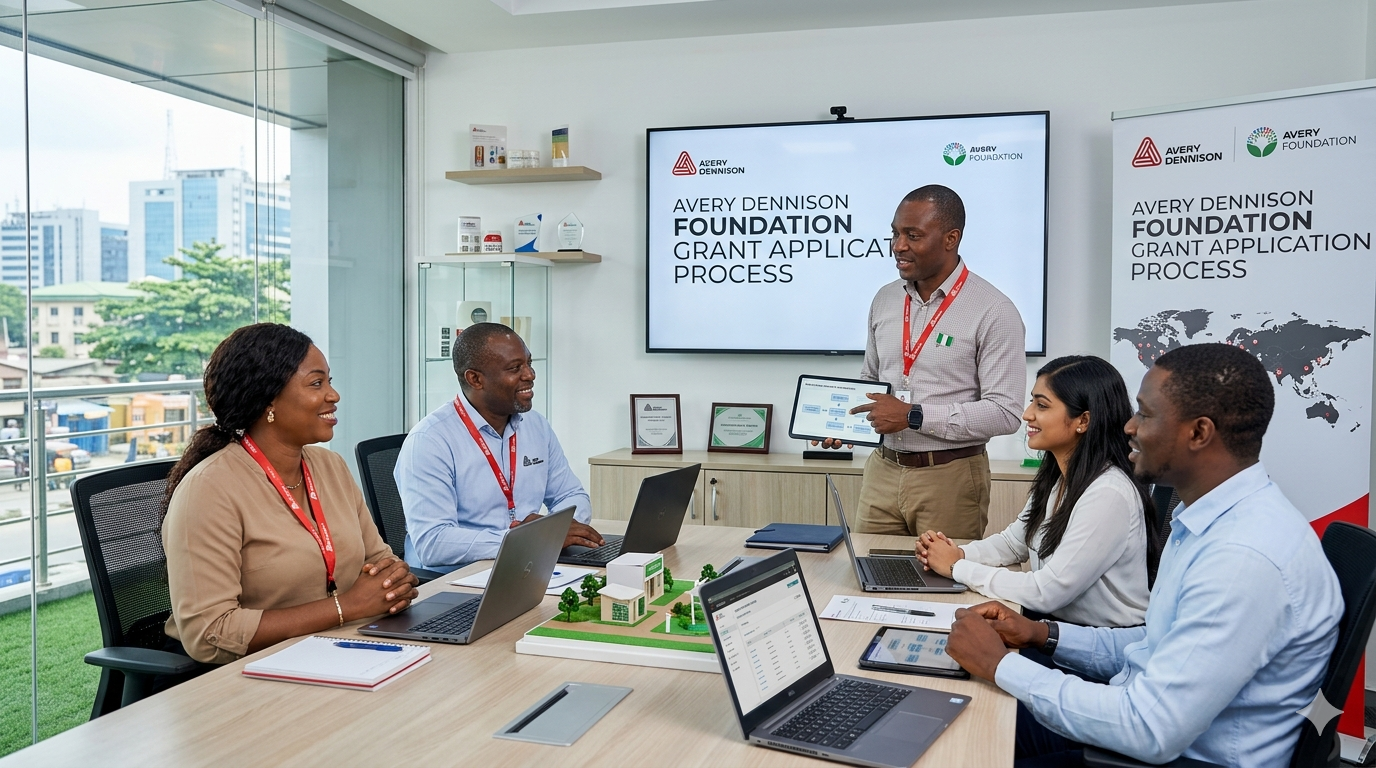
The Avery Dennison Foundation Grant Application Process: Step by Step
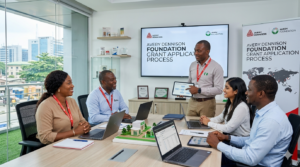
Now let us get into the part most people come here for: exactly how the application process works. ADF has built a clear, multi-step process that begins with a simple eligibility check before asking you to commit significant time to a full proposal. This is actually a thoughtful design because it respects applicants’ time and avoids situations where organizations spend weeks developing detailed proposals only to be told they were never eligible in the first place.
Step 1: Create a Profile on the Online Application System
The first thing you need to do is create a profile on ADF’s official online application system. This is the portal through which all communication about your application will happen, so make sure you use an email address you check regularly and that you provide accurate information about your organization.
Keep your organizational details handy before you start: your registration documents, tax-exempt status or NGO registration number, contact information, a brief description of your work, and information about the communities you serve. Having all of this ready will make the profile creation process much smoother.
Step 2: Complete the Eligibility Form
Once your profile is set up, the next step is to complete an Eligibility Form within the online system. This form is not a full proposal. It is designed to quickly assess whether your organization and your planned project align with ADF’s strategic priorities.
Think of the Eligibility Form as a pre-screening tool. It will ask you about your organization’s mission, the communities you serve, the geographic area of your work, and which of ADF’s impact areas your project addresses. You will also likely be asked about your organization’s DEI practices and your track record of community engagement.
Be clear and specific in your answers. Do not use vague language about wanting to help communities. Describe exactly who you serve, where you work, what problems you are addressing, and how your work connects to ADF’s stated priorities. Reviewers read many of these forms, and organizations that can articulate their work precisely tend to move forward more often.
Step 3: Wait for Staff Review of Your Eligibility Form
After you submit your Eligibility Form, ADF staff will review it to determine whether your organization and project demonstrate strategic alignment with the Foundation’s goals. This step is specifically designed to save your time. If your organization is not a good fit, you will be notified at this stage rather than after completing a full proposal.
You will receive a notification via the system email associated with your profile. This notification will tell you either that you have been invited to complete a full application or that your organization is not a match at this time. Both outcomes are communicated, so you will not be left wondering what happened to your submission.
Step 4: Complete the Full Proposal (If Invited)
If your Eligibility Form is approved and you receive an invitation to submit a full proposal, you will then gain access to the full application within the online system. This is where you will provide comprehensive details about your project, including your goals, planned activities, target population, budget, timeline, expected outcomes, and how you plan to measure success.
This is the stage where your proposal writing skills really matter. A strong full proposal for ADF should do several things clearly and convincingly:
- Describe the specific problem your project addresses and provide data or evidence about the scale and severity of the need
- Explain your organization’s history and experience working in this area and with this community
- Lay out your theory of change: how will the activities you are proposing lead to the outcomes you are promising?
- Show how your work embeds DEI principles throughout program design and delivery
- Present a realistic and detailed budget that demonstrates financial responsibility
- Demonstrate that your organization has the capacity to manage a grant of this size effectively
- Describe how you will measure and report on your results
ADF staff will review your full application and may follow up with you to request additional information or clarification. Be responsive to any such requests. A slow or incomplete response to a clarifying question can slow down or derail an otherwise strong application.
Step 5: Receive the Funding Decision
The final step is receiving the decision on your application. You will be notified through the online system about the outcome. ADF responds to all submissions, which is a genuine sign of respect for applicants’ time and effort. Whether you are funded or not, you will hear back.
Because ADF makes funding decisions on a quarterly basis, there is a natural rhythm to the review cycle. Applications submitted at different points in the year will be reviewed in the next applicable quarterly cycle. There is no hard annual deadline because applications are accepted year-round, but this also means you should apply sooner rather than later to avoid waiting an extra quarter for your application to be reviewed.
ADF’s Core Grantmaking Principles
Beyond the mechanics of the application process, it helps to understand the values that guide how ADF approaches its grantmaking. These principles will shape what reviewers are looking for in your application and what kind of relationship ADF wants to have with its grantees.
Trust-Based Philanthropy: ADF believes that meaningful change requires open, honest, and long-term relationships. They value grantees who communicate honestly about both successes and challenges. They do not want partners who only report good news. They want partners who are willing to have real conversations about what is working and what is not.
Responsive Grantmaking: ADF is willing to respond to urgent needs, including through employee-driven giving and disaster relief efforts. This shows a foundation that understands the world does not always operate on a neat annual grantmaking calendar.
Proactive Grantmaking: ADF does not just wait for good proposals to come to them. They actively seek out organizations that are doing innovative, community-rooted work using human-centered design approaches. This proactive stance means that if your organization is doing standout work in any of their three impact areas, there is a chance ADF may eventually find you even if you have not applied yet.
Tips for Strengthening Your ADF Application
Applying for any competitive grant takes effort, and while ADF is accessible and transparent in its process, that does not mean every application gets funded. Here are a few things you can do to give your application the best possible chance.
First, read the official grantmaking guidelines carefully before you fill in a single field. This sounds obvious, but many organizations rush into applications without thoroughly understanding the funder’s priorities. Knowing exactly what ADF cares about will help you frame your work in language that resonates with their reviewers.
Second, be honest about your organization’s size and capacity. ADF is not only interested in large, well-established organizations. They fund smaller organizations too, but they need to feel confident that you can manage the grant responsibly. If you are a newer organization, be upfront about that and explain what systems and structures you have in place to manage a grant effectively.
Third, focus on impact and evidence. ADF is outcome-focused. They want to fund programs that produce measurable change in people’s lives. Use data to describe the problem you are addressing and be specific about the results you expect to achieve with the grant funding.
Fourth, be clear about how DEI is built into your work. This is not just about having a DEI statement on your website. ADF wants to see that equity is embedded in how you design programs, who leads your organization, how decisions are made, and how you hold yourself accountable to the communities you serve.
Fifth, tailor your proposal to ADF specifically. Do not submit a generic proposal that you use for every funder. Take the time to connect your work explicitly to ADF’s mission, impact areas, and values. Funders can tell the difference between a tailored proposal and a form letter, and it matters to them.
How to Apply for the Avery Dennison Foundation Grant
The entire application process is managed online through ADF’s official system. There is no postal application, no email submission, and no need to print anything. Everything happens through the web portal, which makes it accessible to organizations around the world regardless of where they are located.
To begin your application, visit the official grantmaking page and create your profile in the online system. From there, you can complete your Eligibility Form and track the status of your application as it moves through the review process.
You can start your application by visiting the Avery Dennison Foundation official grantmaking page. This page contains all the information you need to get started, including access to the online application system, details about the three impact areas, and guidance on the eligibility form.
Why the Avery Dennison Foundation Matters for Global Development
In a world where funding for community-level development work is always scarce, the Avery Dennison Foundation represents something genuinely valuable: a corporate funder that has thought carefully about where it can do the most good and built its processes around that thinking. The fact that they accept applications year-round, communicate with all applicants, and prioritize the highest-need communities in the world reflects a level of intentionality that not all foundations have.
For NGOs working in education, environmental sustainability, or livelihood development in underserved communities, ADF is one of the most accessible global funders out there. The application process is online, the eligibility form is designed to save your time, and the funding amounts are substantial enough to make a real difference to most community-level organizations.
If your organization is doing meaningful work that aligns with any of ADF’s three impact areas, there is no good reason to wait. Visit the Foundation’s official website, review the grantmaking guidelines carefully, and start building your profile in the online application system today.
Final Thoughts
The Avery Dennison Foundation grant application process is one of the more straightforward processes you will encounter in the world of international philanthropy. It is online, it is year-round, and it is built to be respectful of applicants’ time. That does not mean it is easy to win a grant, but it does mean that organizations with strong, community-rooted work aligned with ADF’s priorities have a real shot at funding.
Take time to understand their three impact areas deeply. Make sure your organization genuinely embodies the DEI principles they care about. Write a clear, evidence-based proposal that connects your work to ADF’s vision of equitable, sustainable communities around the world. And if you do not get funded the first time, do not give up. Many strong grantees have a relationship history with their funders before they receive their first grant.
The Avery Dennison Foundation is looking for partners, not just applicants. If you approach the process with that understanding, you are already ahead of most of the field.
To begin the application process, click the link below to access the official ADF grantmaking portal:
Apply Now on the Avery Dennison Foundation Official Grantmaking Page