Clarendon Scholarship 2026 For Nigerians | Easy Guide
If there is one scholarship that graduate students around the world consistently place at the very top of their list, it is the Clarendon Scholarship at the University of Oxford. Fully funded, open to every nationality, available across every subject, and requiring no separate application form the Clarendon is arguably the most accessible and most comprehensive graduate scholarship that any UK university offers. And for the 2026–2027 academic year, the Clarendon Fund is offering over 200 new fully funded scholarships to outstanding graduate students from across the globe.
In this complete guide, we cover everything you need to know about the Clarendon Scholarship — its history, the Oxford University Press funding partnership, the full financial benefits package, eligibility criteria, what courses qualify, how selection works across Oxford’s academic divisions, the partnership awards system, the application timeline, key deadlines, what the committee looks for, and expert tips for building the strongest possible application for a Clarendon award.
1. About the University of Oxford
The University of Oxford is the oldest university in the English-speaking world, with teaching dating back to at least 1096 and a formal structure from 1167. Located in Oxford, England, it is consistently ranked as one of the top two or three universities in the world by every major ranking system, including the QS World University Rankings, the Times Higher Education World University Rankings, and the Academic Ranking of World Universities (ARWU).
Oxford is organized across four academic divisions — the Humanities Division, the Social Sciences Division, the Mathematical, Physical and Life Sciences (MPLS) Division, and the Medical Sciences Division plus the Department for Continuing Education. It has 39 colleges and 6 permanent private halls, each with its own distinct character and history. The university is home to over 25,000 students, of whom approximately 11,000 are postgraduate students. Oxford’s graduate research community is one of the most internationally diverse in the world, drawing students from over 160 countries.
The university has produced 73 Nobel Prize winners, 4 Fields Medallists, 6 Turing Award winners, and more than 30 world leaders including at least 28 UK Prime Ministers. Its influence on global scholarship, law, medicine, public policy, science, and culture is unparalleled in the English-speaking world. The Clarendon Scholarship is the university’s flagship mechanism for ensuring that financial barriers never stand between the most academically talented graduate students in the world and a place at Oxford.
2. What Is the Clarendon Scholarship?
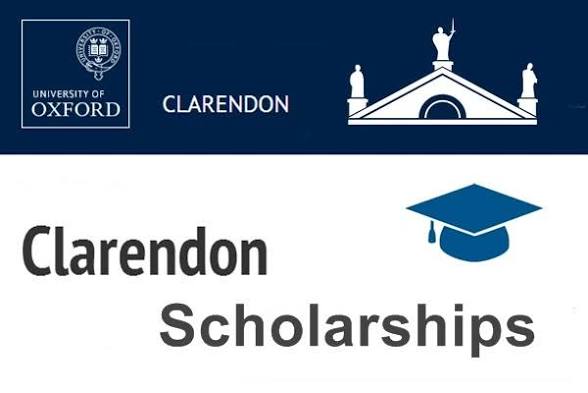
The Clarendon Scholarship formally administered through the Clarendon Fund — is the University of Oxford’s premier fully funded graduate scholarship programme. It is open to applicants from every country in the world, covering every subject at graduate level, and providing a comprehensive financial package that includes full tuition fees, full college fees, and a generous annual living expenses grant.
Clarendon scholarships are awarded purely on the basis of outstanding academic merit and potential. There are no restrictions by nationality, country of ordinary residence, field of study, college, or financial background. It is a pure academic excellence award — the strongest candidates in any field, from any country, who apply to Oxford graduate courses by the relevant deadline are eligible to be considered.
What makes the Clarendon uniquely accessible compared to other prestige scholarships is that there is no separate application form. By submitting a standard Oxford graduate course application before the relevant December or January deadline, every applicant is automatically considered for a Clarendon scholarship. The academics within each department and division — who review your admissions application — simultaneously determine whether to nominate you for a Clarendon award.
As of the 2025–2026 academic year, the Clarendon Fund is celebrating its 25th intake of scholars, having supported over 2,000 Clarendon Scholars since its first cohort arrived at Oxford in 2001. The programme now offers over 200 new fully funded scholarships per year, making it one of the largest fully funded graduate scholarship programmes in the United Kingdom and in the world.
3. Scholarship Overview at a Glance
| Detail | Information |
|---|---|
| Scholarship Name | Clarendon Scholarship (Clarendon Fund) |
| Host University | University of Oxford, United Kingdom |
| Funded By | Oxford University Press (OUP) — over £37 million contributed to date |
| Established | 2001 (Council resolution 2000) |
| Scholarship Type | Fully funded (tuition + college fees + living expenses grant) |
| Degree Level | Graduate — Master’s and DPhil (PhD) only |
| Annual Awards | Over 200 new scholarships per year (2025–26 and 2026–27) |
| Nationality Restriction | None — open to all nationalities and all fee statuses |
| Subject Restriction | None — all graduate degree-bearing subjects eligible |
| Full-time Living Grant | At least £15,009 per year (2025–26; UKRI minimum doctoral stipend rate) |
| Part-time DPhil Living Grant | At least £2,502 per year (2025–26) |
| Part-time Master’s Living Grant | At least £5,003 per year (2025–26) |
| Separate Application Required | No — automatic consideration with Oxford graduate course application |
| December Deadline | 2 December 2025 (for courses with early deadline) |
| January Deadline | 8 January 2026 (for most courses) |
| Results Notification | CB1 (offer) by end of April; CB2 (breakdown) April–June |
| Official Website | ox.ac.uk/clarendon |
| Total Scholars to Date | Over 2,000 since 2001 |
4. History — From Edward Hyde to Oxford University Press
The name “Clarendon” has deep historical roots at the University of Oxford. Edward Hyde, the 1st Earl of Clarendon, served as Chancellor of the University of Oxford from 1660 to 1667. He wrote a famous and financially successful historical work, History of the Great Rebellion, about the English Civil War of the 17th century. The profits from his book were used to construct the Clarendon Building on Broad Street in central Oxford — a landmark that was subsequently used to house Oxford University Press (OUP).
The Clarendon Fund was named in honour of the Clarendon Building and its historic linkage to OUP. This history means that every Clarendon Scholar is, in a very real sense, continuing a tradition that stretches back over three centuries to the English Civil War era and to one of the most significant works of English historiography ever written.
The Clarendon Fund was formally established by the Council of the University of Oxford in 2000 and welcomed its first scholars in 2001. The original aim, as agreed by the Council, was “to assist the best overseas graduate students who obtain places to study in the University” — a commitment to removing financial barriers for outstanding international talent, regardless of their financial means.
A significant expansion came on 1 September 2011 — the Fund’s 10th anniversary — when the scholarship was broadened to include all nationalities and all fee statuses. From that point, UK home students and EU students became equally eligible alongside overseas students. The Fund’s core mission remained unchanged — to assist academically outstanding graduate students — but its reach expanded to cover every graduate student at Oxford.
The Clarendon Fund logo was designed in 2009 in the run-up to the Fund’s 10th anniversary, and was simplified and updated in 2014. Since its founding, the Fund has been primarily sponsored by Oxford University Press, which has contributed more than £37 million to the Fund to date — one of the largest single corporate investments in graduate scholarship funding at any UK university.
5. Full Financial Benefits Package
The Clarendon Scholarship provides a comprehensive financial package that covers the major costs of graduate study at Oxford. For full-time scholars, the package has three core components:
Full tuition fees: All Clarendon Scholarships cover course (tuition) fees in full. This applies equally to Home and Overseas fee-status students. Oxford’s tuition fees vary by programme and fee status — ranging from approximately £10,000 per year for some humanities programmes to over £40,000 per year for certain professional and scientific courses. The Clarendon covers the full amount, regardless of programme or fee status.
Full college fees: In addition to university tuition fees, Oxford charges college fees — a separate annual charge paid to the student’s college. All Clarendon Scholarships cover college fees in full. This is an important distinction from many other scholarships that cover tuition only, leaving college fees as an additional out-of-pocket expense. The Clarendon eliminates both costs entirely.
Annual living expenses grant: Full-time Clarendon scholars receive a generous annual grant for living costs. This is set at a minimum of the UKRI (UK Research and Innovation) minimum doctoral stipend rate. For the 2025–26 academic year, this is at least £15,009 per year. The university describes this as normally sufficient to cover the living costs of a single student living in Oxford. The rate is reviewed annually and increases in line with UKRI guidance. It is worth noting that this is a minimum floor — through the Partnership Awards system, many scholars receive total packages above this amount.
6. Benefits for Part-Time Scholars
The Clarendon Scholarship is not limited to full-time students. Part-time scholars also receive a tailored financial package, though the structure differs from the full-time award:
All part-time Clarendon scholars receive full coverage of their part-time course fees and college fees. In addition, part-time scholars receive a study support grant to assist with non-fee costs. For 2025–26, the study support grants are as follows: part-time DPhil scholars receive at least £2,502 per year, while part-time Master’s scholars receive at least £5,003 per year. These grants assist with costs such as books, research materials, travel, and other non-fee academic expenses.
For certain part-time programmes with a modular fee structure and no fixed number of modules, the Clarendon scholarship will fund the minimum number of modules required for the degree. No funding is provided for additional optional modules beyond the minimum requirement.
7. Scholarship Duration and Fee Liability
Clarendon Scholarships are normally offered for the full period of the scholar’s fee liability — the period during which they are charged tuition fees by the University of Oxford. In practice, this means:
- One year for one-year master’s programmes (MSc, MSt, MBA, MFE)
- Two years for two-year master’s programmes (MPhil, BPhil)
- Three to four years for DPhil programmes, depending on the discipline
Scholars are notified of the exact duration of their scholarship in their offer letters. Two important points about duration:
First, continuation charges — fees charged after the formal fee liability period ends — are not covered by the Clarendon Fund. Students who take longer than their formal fee liability period to complete their degree are responsible for any continuation charges personally.
Second, at the discretion of the academic divisions, some Clarendon scholarships cover an additional period of study beyond the fee liability period. During this additional period, only the living expenses grant is paid — continuation charges remain the student’s responsibility. Scholars are informed in their offer letters if their scholarship includes this extended provision.
8. Eligible Courses and Degree Types
The Clarendon Scholarship covers every degree-bearing graduate course at the University of Oxford. This is one of the scholarship’s most distinctive features — unlike many other prestigious scholarships that restrict eligibility to specific fields or degree types, the Clarendon is genuinely subject-neutral and degree-type-inclusive.
The following degree types are all eligible for Clarendon consideration:
- One-year taught master’s degrees: MSc (Master of Science), MSt (Master of Studies), MBA (Master of Business Administration), MFE (Master of Financial Economics)
- Two-year master’s degrees: MPhil (Master of Philosophy), BPhil (Bachelor of Philosophy — a graduate philosophy degree at Oxford)
- Doctoral degrees: DPhil (Oxford’s designation for the PhD / Doctor of Philosophy) — the most common degree type among Clarendon scholars
- Master of Research (MRes) degrees
- Part-time versions of eligible master’s and DPhil programmes
Not eligible: Postgraduate Certificate (PGCert) and Postgraduate Diploma (PGDip) courses are specifically excluded from the Clarendon scholarship. These qualifications do not lead to a full degree and therefore fall outside the Fund’s scope.
There is no subject restriction within these degree types. Clarendon scholars study subjects as diverse as Biochemistry, Law, Creative Writing, Public Policy, Computer Science, Clinical Medicine, Archaeology, Economics, Education, Theology, Physics, and everything in between. In any given year, scholars come from all four academic divisions and the Department for Continuing Education, reflecting the Clarendon’s commitment to supporting the breadth of Oxford’s intellectual life.
9. Eligibility Criteria — Who Can Apply
The Clarendon Scholarship has deliberately broad and inclusive eligibility criteria. To be considered, you must meet all of the following:
- Applying for a new degree-bearing graduate course at Oxford: You must be applying to start a new master’s or DPhil programme at the University of Oxford. “New” is key — you must be starting a new degree, not continuing in one you are already enrolled in.
- Applying by the relevant December or January admissions deadline: This is the single most important condition. You must submit your Oxford graduate course application by either the December deadline (2 December 2025 for 2026–27 entry) or the January deadline (8 January 2026), whichever applies to your specific course. Applications after the relevant deadline are not considered for Clarendon, regardless of academic quality.
- Full-time or part-time: Both full-time and part-time applicants are eligible, provided their programme is degree-bearing (not a PGCert or PGDip).
- All nationalities and fee statuses: No restrictions whatsoever by nationality, country of ordinary residence, or tuition fee status. Home (UK), EU, and Overseas (international) students are all equally eligible. Clarendon scholars have come from across the entire world — “from the USA to Australia, Venezuela to Vietnam and from Norway to Nigeria,” as the university itself describes it.
- All subject areas: No restrictions by subject or academic discipline.
- Outstanding academic merit and potential: The selection standard — not a formal score requirement, but successful applicants typically hold the equivalent of a UK first-class or strong upper second-class honours degree. A GPA equivalent of approximately 3.7 or above on a 4.0 scale is commonly associated with competitive Clarendon applicants.
10. Who Is NOT Eligible
Despite its broad inclusivity, the Clarendon has specific ineligibility conditions:
- Current Oxford students continuing in the same degree: If you are enrolled at Oxford and will continue studying for the same degree programme, you cannot receive a Clarendon scholarship for it. You cannot be awarded Clarendon for a degree you are already enrolled in.
- Applicants with deferred graduate offers: If you hold a deferred graduate offer to start at Oxford in 2025–26 that has been pushed to a future year, you are not eligible to be considered for Clarendon in the year you actually start. The scholarship consideration must happen in the application cycle in which you first applied.
- Postgraduate Certificate and Diploma students: PGCert and PGDip programmes are explicitly excluded — the Clarendon covers only degree-bearing courses.
- Students who have previously received a Clarendon Scholarship for the same level of study: You cannot receive a second Clarendon award for the same degree level that a previous Clarendon already funded.
- Applicants who miss the December or January deadline: Missing the applicable deadline is an absolute disqualifier. There are no exceptions or late applications on compassionate grounds.
One nuance worth noting: a current Oxford master’s student who is applying to start a new DPhil course is eligible — even though they are currently studying at Oxford. The key is that they are applying for a new degree, not continuing in the same one.
11. How Clarendon Scholars Are Selected
The Clarendon selection process is distinctive and shapes how you should think about your Oxford application. The University of Oxford has one stated goal when selecting Clarendon scholars: to choose the best students worldwide, as decided by experts in each student’s field.
When you submit your Oxford graduate course application, the academics in your proposed department review it in the normal admissions process. They assess the academic quality and suitability of your application for a place to study. In parallel, the same academics also determine whether to nominate you for a Clarendon scholarship. This means the people deciding your scholarship are your potential supervisors and departmental colleagues — specialists who understand your field deeply, not a generalist panel applying cross-disciplinary criteria.
The primary selection criterion is demonstrated academic excellence. This is evidenced through undergraduate grades, research publications, conference presentations, prizes and awards, academic references, research proposals, and other indicators of scholarly ability. Unlike many other competitive scholarships, the Clarendon does not specifically seek a track record of leadership or extracurricular achievement. It is a pure academic merit award. The Clarendon Fund’s own description makes this explicit: unlike many scholarships that require a track record of leadership, the Clarendon focuses primarily on proven academic performance and potential for advancing one’s field of study.
Selection criteria may vary between departments and divisions, reflecting different standards and indicators of excellence in different academic fields. A strong Clarendon application in Biochemistry will look different from one in English Literature or Law — but the core criterion in all cases is the same: exceptional academic merit and the potential to advance your field during and beyond your time at Oxford.
12. The Four Academic Divisions and Selection Process
Oxford’s academic life is organized across four academic divisions, and Clarendon’s selection process is designed to ensure scholars are nominated from all four. The Fund explicitly aims to award scholarships to students from each division and the Department of Continuing Education, supporting the broad interdisciplinary representation that defines the Clarendon community.
The Humanities Division includes English Language and Literature, Classics, History, Music, Linguistics, Philosophy, Medieval and Modern Languages, Oriental Studies, and Theology and Religion. Clarendon scholars from the Humanities Division span some of the most varied and intellectually distinctive research programmes at Oxford.
The Social Sciences Division encompasses Economics, Education, Geography and the Environment, International Development, Law, Politics and International Relations, Sociology, and the Saïd Business School (home to MBA and MFE students). It is one of Oxford’s largest divisions and consistently produces a significant proportion of Clarendon scholars each year.
The Mathematical, Physical and Life Sciences (MPLS) Division covers Computer Science, Engineering Science, Mathematics, Physics, Chemistry, Earth Sciences, Materials, and Statistics. Research degrees (DPhil) are especially common among Clarendon scholars in MPLS, reflecting the division’s deep research culture.
The Medical Sciences Division encompasses Biochemistry, Biomedical Sciences, Experimental Psychology, Pharmacology, Physiology, Anatomy and Genetics, Oncology, Psychiatry, and many other clinical and pre-clinical disciplines. Its integration with the Oxford University Hospitals and the Oxford Biomedical Research Centre makes it a world leader in translational and clinical research.
Each division has a Funding Panel that meets in February or March after the January admissions deadline. The Funding Panel reviews nominations from departments and confirms who the Clarendon scholars from their division will be. Once confirmed, nominations are sent to the Clarendon Fund Administrator, who issues scholarship offer letters and welcomes new scholars to the community.
13. Partnership Awards — The Unique Clarendon Funding Model
One of the most important and underappreciated features of the Clarendon Scholarship is its Partnership Awards system. This is what makes the Clarendon not just a single scholarship, but an entire funding ecosystem that is unique among graduate scholarship programmes.
The Clarendon Fund works in collaboration with a wide network of partner funders, including Oxford colleges, academic departments and divisions, University trust funds, and external organisations. These partners contribute funding that allows the Clarendon to spread scholarship costs across multiple sources — enabling the Fund to support more scholars than the core OUP funding alone could cover.
For the 2024–25 cohort, Clarendon collaborated with over 250 partnership awards, providing an additional £9.1 million to support new scholars. In the 2023–24 cohort, 57% of scholars received college partnership awards worth over £3.16 million in total. These figures illustrate how central the partnership model is to the Clarendon’s operation.
After a student accepts their initial Clarendon scholarship offer (the CB1 letter), the Clarendon Fund Administrator builds a bespoke funding package for each scholar. This involves matching available partnership awards to scholars based on each award’s eligibility requirements — which may include college affiliation, subject area, nationality, or other criteria. The process is complex given the varying requirements across 250+ partnership awards, but no further information is required from scholars during this stage.
Some scholars may need to transfer to a different college in order to take up a particular partnership award. This is handled by the Administrator in coordination with the relevant colleges. The critical guarantee is that the total value of a scholar’s funding package will never decrease as a result of the inclusion of partnership awards. Partnership funding can only enhance the base Clarendon package, never reduce it.
Once a scholar’s bespoke package is finalised, they receive a funding breakdown letter (the CB2) outlining the exact funding arrangements — confirming which sources are contributing to each element of the package and confirming college placement. Awards that include partnership funding are also co-named, recognising the contributing partner’s investment.
Named partnership awards available through Clarendon include the CHK Foundation scholarships (any full-time or part-time graduate course), the Helmore Graduate Scholarships (established 1996 for full-time graduate students), and the Hilla Ginwala Scholarships (for Indian nationals applying to full-time graduate courses). The Oxford Australia Scholarship Fund also partners with Clarendon to offer joint awards for Australian applicants selected for a Clarendon scholarship.
14. How to Apply — Step by Step
The application process for the Clarendon Scholarship is genuinely straightforward. There is no separate scholarship form, no additional essays, no additional references, and no extra portal to navigate. Here is the complete process:
Step 1 — Choose your Oxford graduate course. Identify the master’s or DPhil programme at Oxford that best fits your academic and research goals. Explore the full range of graduate courses at ox.ac.uk/graduate. Check entry requirements, start dates, and most critically the application deadline for your chosen course.
Step 2 — Identify the relevant Clarendon deadline for your course. Each Oxford graduate course has either a December deadline or a January deadline for Clarendon consideration. For the 2026–27 entry cycle, these were 2 December 2025 and 8 January 2026 respectively. Find the exact deadline for your specific course on its dedicated page on the Oxford website there is no single universal date. Applying after the relevant deadline makes you ineligible for Clarendon, regardless of academic quality.
Step 3 — Prepare your graduate course application materials. These typically include: academic transcripts from all previous institutions; a personal statement or statement of purpose; a research proposal (for DPhil applications); two or three academic references; writing samples (for some humanities courses); standardised test scores (GRE, GMAT — where required); and English language test scores (IELTS or TOEFL) if applicable. No additional materials are required specifically for the Clarendon scholarship.
Step 4 — Submit your application through the Oxford online portal. All Oxford graduate applications are submitted through the university’s online application system. Complete the form fully and accurately, and submit before the December or January deadline applicable to your course. By submitting your course application, you are automatically and simultaneously considered for a Clarendon scholarship.
Step 5 — Wait for admissions and Clarendon decisions. After the January deadline, academic departments review applications. Admissions and Clarendon nomination decisions happen in parallel. Divisional Funding Panels meet in February and March. Initial Clarendon scholarship offer letters (CB1) are emailed to successful scholars, with the majority sent by the end of April.
Step 6 — Accept your CB1 scholarship offer. If you receive a CB1 letter, respond by accepting the scholarship. Your funding is now guaranteed, subject to meeting the academic conditions of your place to study at Oxford.
Step 7 — Receive your CB2 funding breakdown letter. During April, May, and sometimes into June, the Clarendon Fund Administrator matches Partnership Awards to scholars and finalises bespoke funding packages. Once your package is confirmed, you receive the CB2 letter detailing the full funding arrangements and confirming your college placement.
If you have not heard by mid-June: Due to the very large number of eligible applicants, unsuccessful students are not contacted. If you have not received a CB1 offer by mid-June, you should assume you have not been awarded a Clarendon scholarship for that cycle. A small number of late nominations occur over the summer if earlier nominees decline their awards, but this is rare.
15. Application and Scholarship Timeline
Autumn (September–November): Oxford graduate applications open for the following academic year. UKRI minimum doctoral stipend rate for the upcoming year is confirmed. Applicants prepare documents and application materials.
December: December deadline (2 December 2025 for 2026–27 cycle) for courses with an early application deadline. Applicants to these courses must submit by this date to be considered for Clarendon.
January: January deadline (8 January 2026 for 2026–27 cycle) for the majority of Oxford graduate courses. This is the primary Clarendon deadline. All applicants submitting by this date are automatically considered for Clarendon.
February–March: Academic departments review applications. Admissions and Clarendon nomination decisions are made by departmental academics. Divisional Funding Panels meet to confirm scholarship nominations.
Early April: Initial Clarendon scholarship offer letters (CB1) emailed to successful scholars. Majority of CB1 letters sent by end of April. Scholars accept or decline their scholarship offer.
April–June: Partnership Awards matching process begins. The Clarendon Fund Administrator creates bespoke funding packages for each scholar. Funding breakdown letters (CB2) sent as packages are confirmed, along with college placement confirmations.
Summer: Small number of late nominations possible if earlier nominees decline. Scholars who have not heard by mid-June should assume they were unsuccessful.
September/October: Academic year begins. New cohort of Clarendon scholars arrives at Oxford.
16. Key Deadlines for 2026–2027
For the 2026–2027 academic year entry (September/October 2026), the relevant Clarendon deadlines from the 2025–26 application cycle were:
- December deadline: 2 December 2025 — for courses with an early admissions deadline
- January deadline: 8 January 2026 — for most Oxford graduate courses
- CB1 Offers (initial scholarship letters): Majority sent by end of April 2026
- CB2 Funding Breakdown Letters: Sent throughout April, May, and into June 2026
- Final no-award assumed if not contacted by: Mid-June 2026
For the 2027–2028 entry cycle (applications opening autumn 2026), deadlines are expected to follow a similar pattern. Always verify the exact deadline for your specific course on its dedicated page at ox.ac.uk/graduate deadlines vary by course, and some courses have multiple application rounds.
17. Clarendon vs Rhodes vs Chevening — How They Compare
Students considering Oxford and UK graduate study often compare the Clarendon with two other prestigious scholarships: the Rhodes Scholarship and the Chevening Scholarship. Understanding the differences helps you identify which scholarship best fits your profile and goals.
The Rhodes Scholarship, like the Clarendon, is based at the University of Oxford and is fully funded. However, Rhodes is open only to students from specific countries through distinct national competitions — it is not universally open to all nationalities. Rhodes has a strong emphasis on leadership potential, civic engagement, and character alongside academic achievement — criteria that are explicitly not part of the Clarendon selection process. Rhodes is typically awarded for two years, while Clarendon follows the full duration of the specific degree programme. The Clarendon offers significantly more scholarships annually (200+) compared to the Rhodes (approximately 100 globally per year). The Rhodes has its own separate application process; the Clarendon requires none.
The Chevening Scholarship, funded by the UK Foreign, Commonwealth and Development Office (FCDO), is a UK-wide scholarship available at any UK university (not just Oxford) for one-year master’s programmes only. Chevening has nationality restrictions — it targets students from specific Chevening-eligible countries. Unlike Clarendon, Chevening explicitly seeks leadership potential and typically requires applicants to have at least two years of work experience. Chevening does not fund DPhil or multi-year master’s programmes. Chevening requires a separate, detailed application with additional essays and references; Clarendon requires none of these.
The Clarendon’s unique differentiators are: universal nationality eligibility, complete subject freedom, no separate application form, full tuition and college fee coverage for both Home and Overseas students, multi-year doctoral funding, and the Partnership Awards ecosystem that tailors each scholar’s package individually. For the strongest academic candidates seeking Oxford graduate study across any field and any degree type, the Clarendon is the most broadly accessible and academically prestigious option available.
18. The Clarendon Scholars’ Association and Community
The Clarendon scholarship offers more than financial support — it provides membership in the Clarendon Scholars’ Association (CSA), the formal community of Clarendon scholars at Oxford, funded directly by the Clarendon Fund itself. The community is one of the most active, internationally diverse, and multidisciplinary at Oxford.
In the 2025–26 academic year, there are over 400 Clarendon Scholars in residence at Oxford simultaneously — representing dozens of nationalities, every academic division, and virtually every field of human knowledge. The CSA organises events spanning career networking, interdisciplinary academic seminars, cultural exchange, social gatherings, and more. The explicit goal is to foster long-lasting friendships and professional connections between scholars that persist well beyond their time at Oxford.
The Clarendon community is particularly valued for its interdisciplinary character. A DPhil student in Biochemistry might find themselves at a CSA event in conversation with an MPhil student in International Relations, a DPhil student in Medieval History, and an MBA student from the Saïd Business School. These cross-disciplinary connections are rare in academic environments — and they are one of the features that Clarendon scholars most frequently cite as among the most enriching elements of their Oxford experience.
Since the scholarship’s founding, over 2,000 individuals have been Clarendon scholars. The alumni community spans academia, public service, international organisations, industry, arts and culture, and virtually every sector of professional life worldwide. Being part of this community — and the lifelong network it creates — is one of the less quantifiable but deeply significant benefits of a Clarendon scholarship.
19. Tips for a Successful Clarendon Application
Because there is no separate Clarendon application, maximising your chances of a Clarendon scholarship means maximising the quality of your Oxford graduate course application in every respect. Here is expert, specific guidance on how to do that:
Meet the deadline — without exception. There is no Clarendon scholarship for an applicant who misses the December or January deadline. This is an absolute rule with no exceptions. Identify the exact deadline for your specific course well in advance and submit your application at least two to three weeks before that date to allow for any technical issues or last-minute document challenges.
Prioritise your academic record above everything else. The Clarendon is a pure academic merit award. There is no Clarendon credit for leadership positions, community service, sports achievements, or professional experience — these are the criteria of the Rhodes and Chevening, not the Clarendon. What the Clarendon committee cares about is your academic record: your grades, your research publications, your prizes and awards, and your intellectual trajectory. If your academic record is outstanding, everything else is secondary. If it is not outstanding, no other achievements will compensate.
Write a research proposal that is original, focused, and intellectually serious. For DPhil applications in particular, the research proposal is one of the most important elements that the Clarendon nomination committee evaluates. It should demonstrate clear familiarity with the existing literature in your field, identify a specific and well-defined gap or problem your research will address, propose a credible and original methodology, and show genuine intellectual maturity and independent thinking. Broad, impressionistic proposals that lack specificity are far weaker than focused ones that demonstrate that you have already thought deeply about your research project.
Choose referees who know your academic work deeply and specifically. Your academic references are read by the academics making your Clarendon nomination decision. A strong reference from a supervisor who has read your work closely, engaged with your ideas directly, and can describe your intellectual contributions specifically is vastly more valuable than a letter from a prominent person who barely knows your name. Ask referees who can write about your specific academic work, not your general character.
Write a personal statement that is academically substantive and Oxford-specific. Articulate clearly why you want to study this specific programme, why at Oxford specifically — naming supervisors, research groups, laboratories, or departmental resources that are uniquely relevant to your work — and what intellectual questions drive your academic interest. Generic statements about Oxford’s prestige are weak. Demonstrating that you have done serious research into the specific academic environment you want to join is strong.
Apply to the course that genuinely fits your academic goals best. Clarendon nominations are made by departmental academics who are evaluating the fit between your application and the academic life of their department. The strongest applications are those where the fit between the applicant’s academic background and the department’s research culture is genuinely compelling. Do not apply strategically to a course you think might be easier to get into apply to the course that best aligns with your genuine intellectual interests and research experience.
Research your potential supervisor before applying. For DPhil applications, identifying and naming a specific potential supervisor in your research proposal — and demonstrating familiarity with their recent work — strengthens your application significantly. It shows the department that you have done serious homework and that you understand how your proposed research fits within the department’s existing research landscape.
21. Final Thoughts
The Clarendon Scholarship at the University of Oxford stands in a class of its own among the world’s great graduate scholarships. No other major scholarship at a leading UK university offers the combination of universal nationality eligibility, complete subject freedom, no separate application requirement, full tuition and college fee coverage, a generous living grant benchmarked to the UKRI minimum doctoral stipend, multi-year doctoral funding, and a bespoke Partnership Awards ecosystem that creates individually tailored funding packages for each scholar.
Its origins in the intellectual legacy of Edward Hyde, 1st Earl of Clarendon, and the remarkable financial generosity of Oxford University Press — which has contributed over £37 million since the Fund’s founding — give the scholarship a historical depth and institutional seriousness that few other programmes can match. The fact that over 2,000 scholars have passed through Oxford on Clarendon funding across 25 cohorts, and that the programme now offers over 200 new scholarships per year, reflects a quarter century of sustained commitment to one of the most important principles in higher education: that financial circumstance should never stand between the most talented students in the world and access to the most excellent graduate education.
For any graduate student with exceptional academic credentials considering a master’s or DPhil at Oxford, the message is simple: apply by the relevant December or January deadline for your course and by doing so, you have done everything needed to be considered for the Clarendon Scholarship. The rest is in the hands of the academics in your field who will evaluate your work.
Make your application as strong as it can possibly be. Be specific in your research proposal. Choose referees who know your academic work deeply. Meet the deadline without fail. And if the Clarendon selects you, you will join one of the most extraordinary graduate communities in the world at one of the greatest universities in the history of humanity.
For the most current information, visit the official Clarendon Scholarship website at ox.ac.uk/clarendon. For course-specific deadline information, visit individual course pages through Oxford’s graduate admissions portal at ox.ac.uk/graduate.