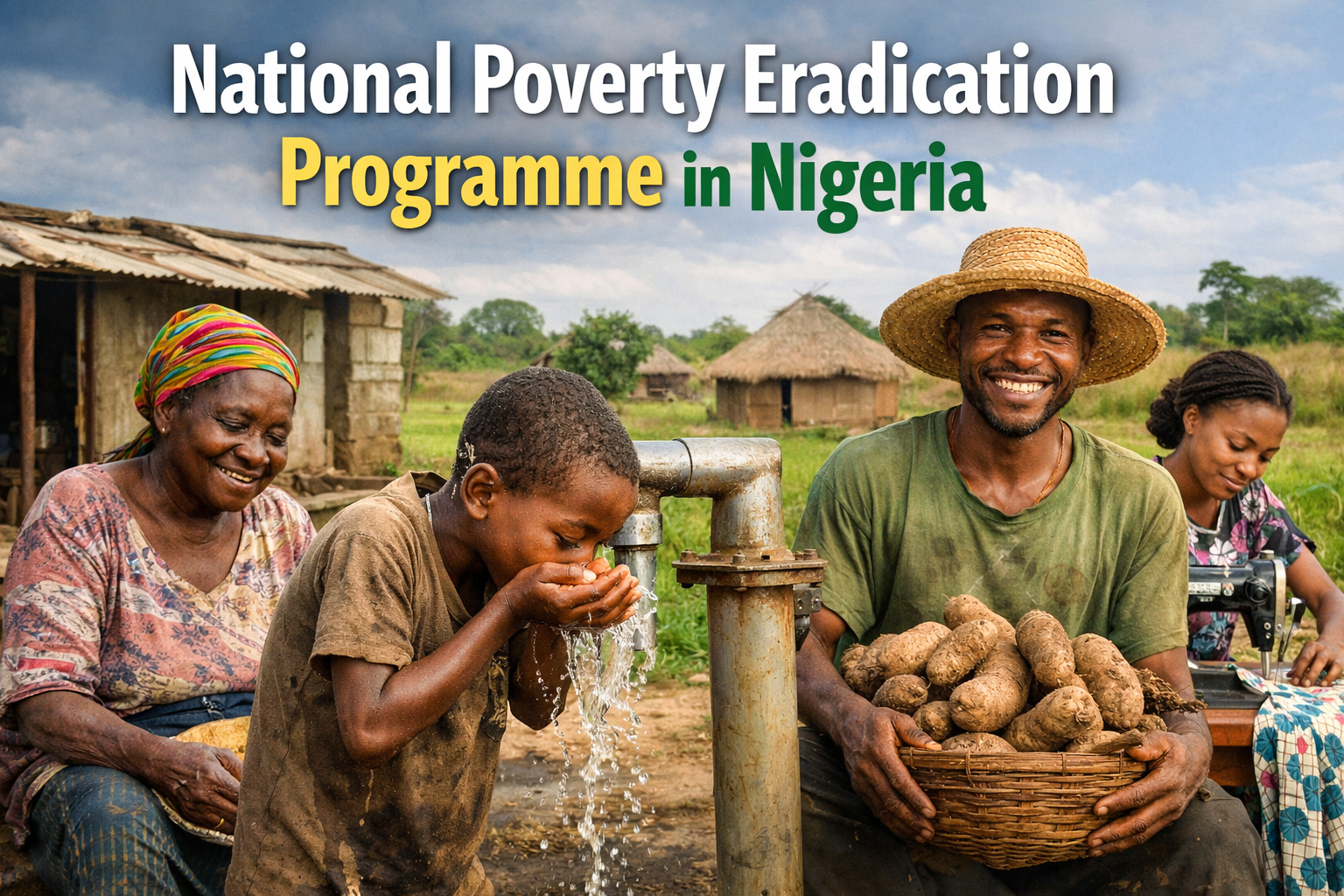
If you are a Nigerian citizen who is unemployed, underemployed, or simply looking for a way to improve your financial situation, you may have heard of the National Poverty Eradication Programme (NAPEP). This is one of the most talked-about federal government initiatives in recent times, and for good reason. It offers real, practical support to ordinary Nigerians across the country, from free vocational training to monthly stipends and micro-credit support.

In this article, we are going to walk you through absolutely everything you need to know about NAPEP in 2025. What the programme is, who can apply, what benefits you will receive, how to apply step by step, and answers to the most common questions people ask. By the time you finish reading this, you will have a clear picture of whether NAPEP is right for you and how to take that first step.
What is the National Poverty Eradication Programme (NAPEP)?
The National Poverty Eradication Programme, widely known by its acronym NAPEP, is a Federal Government of Nigeria initiative that was originally established in 2001. It was created to tackle the deep-rooted problem of absolute poverty in Nigeria and was designed to replace an earlier initiative called the Poverty Alleviation Programme.
Nigeria, despite having one of Africa’s largest economies and significant natural resources including oil, has continued to struggle with widespread poverty. According to the National Bureau of Statistics, about 41% of the Nigerian population was classified as poor in 2019. NAPEP was created as a direct government response to this challenge, targeting both urban and rural communities that have historically been left behind by economic growth.
The programme does not just hand out money and walk away. It is structured around a transformation agenda that covers four key areas: the material, cultural, social, and political wellbeing of Nigerian citizens. This means NAPEP is designed to change lives in a lasting, sustainable way, not just provide short-term relief.
Over the years, NAPEP has supported thousands of Nigerians through vocational skills training, internship opportunities, micro-credit financing, and job creation in key sectors. In 2025, the programme has returned with renewed energy and a more streamlined digital application process, making it easier than ever for eligible Nigerians to participate.
Why NAPEP Matters for Nigerians in 2025
The economic situation in Nigeria has placed significant pressure on households across the country. Rising food prices, unemployment among youth, and limited access to credit for small business owners have made life genuinely difficult for millions of people. NAPEP comes in at exactly the right time for many Nigerians.
What makes the programme stand out is that it goes beyond talking about poverty eradication to actually doing something about it. Whether you are a young graduate who cannot find a job, a woman trying to grow a small business, a school leaver who wants to learn a trade, or an older citizen who is underemployed, NAPEP has something for you.
The 2025 edition of the programme has placed a strong emphasis on youth empowerment, rural development, and digital inclusion. It recognizes that poverty cannot be solved with a one-size-fits-all approach, which is why the programme includes multiple pathways for beneficiaries to follow depending on their individual circumstances and goals.
Another reason NAPEP matters is that it is a government-backed programme with real resources behind it. Beneficiaries receive guaranteed monthly stipends, access to startup grants, and mentorship support that helps them transition from training into actual economic activity. This is not a vague promise; it is a structured system with accountability measures built in.
What are the Core Goals of NAPEP?
Understanding what NAPEP is trying to achieve helps you appreciate the full scope of the programme and whether it aligns with your personal goals. The programme has several clear objectives that guide everything it does.
First, NAPEP aims to reduce absolute poverty among Nigerians, particularly those in rural and underserved communities. Second, the programme focuses on creating income-earning opportunities for Nigerians who currently have no stable source of livelihood. This includes supporting people in setting up micro-businesses that can generate consistent income over the long term.
Third, NAPEP works to discourage rural-urban drift, which is the pattern of young people leaving their villages to crowd into cities in search of work that often does not exist. By bringing skills training and economic opportunities to communities across Nigeria, NAPEP aims to make it possible for people to thrive where they already live.
Fourth, the programme is committed to growing the local economy by supporting small businesses, vocational trades, and industries like automobile repair and assembly, agriculture, construction, and information and communication technology. Finally, NAPEP coordinates with government ministries and other institutions to develop comprehensive plans and guidelines for poverty reduction at every level.
NAPEP Programme Components and Sub-Schemes
One of the things that makes NAPEP a comprehensive poverty reduction initiative is the fact that it operates through several distinct programme components. Each component addresses a different aspect of the poverty problem and targets a specific group of beneficiaries.
Capacity Acquisition Programme (CAP)
The Capacity Acquisition Programme is the skills-building arm of NAPEP. Under CAP, Nigerians are trained in vocational trades and practical skills that can immediately translate into earning opportunities. Trades covered include tailoring and fashion design, automobile repair, welding and fabrication, information and communication technology, aluminium work, carpentry, farming and agribusiness, and many others. Training periods range from a few weeks to several months depending on the trade and depth of training required.
Mandatory Attachment Programme (MAP)
The Mandatory Attachment Programme is the employment and internship component of NAPEP. Through MAP, selected beneficiaries are placed in internship positions with public and private sector organisations where they gain hands-on work experience. This is especially valuable for graduates and young Nigerians who want to transition into formal employment but lack the experience that most employers require.
Micro-Credit and Business Support
NAPEP also provides micro-credit support to Nigerians who have a business idea or who have completed training and need capital to get started. The loans offered are either interest-free or carry very low interest rates, making them far more accessible than commercial bank loans. This component is particularly important for aspiring entrepreneurs who have the drive and the skills but lack the startup capital.
Social Welfare Interventions
For the most vulnerable groups in society, including women, widows, people living with disabilities, and victims of vesicovaginal fistula (VVF), NAPEP provides targeted social support. This includes access to basic education, healthcare assistance, financial inclusion tools, and other forms of support that help these groups participate more fully in economic and social life.
NAPEP 2025 Benefits: What Will You Actually Receive?
This is probably the question that most people are asking, and understandably so. Here is a clear breakdown of what successful NAPEP applicants can expect to receive in 2025.
Monthly Stipend of N100,000
All selected beneficiaries receive a monthly stipend of N100,000 from NAPEP. This payment is made subject to achieving planned results for each month, meaning you are expected to actively participate and meet the goals set out in your programme. This is performance-based support, which ensures accountability from both the programme and the beneficiary.
Free Vocational Training
NAPEP covers the cost of vocational training for all selected participants. You do not pay anything to receive training in your chosen trade or technical field. Training is delivered in communities across Nigeria, bringing the opportunity directly to people rather than requiring them to travel long distances.
Internship and Startup Grants
Beyond training, NAPEP provides grants that help you transition from being a trainee to being a practitioner. Whether you want to set up your own small business or step into an internship role with an established organisation, the programme provides financial support to make that happen.
Micro-Credit Access
If you want to start or grow a small business, NAPEP provides access to micro-credit loans. These are offered with low or zero interest, which means you can borrow the capital you need to start your business without the crushing interest rates that often trap small business owners in debt.
Mentorship and Progress Tracking
NAPEP does not just train you and disappear. The programme includes ongoing mentorship and progress tracking to help beneficiaries succeed after training. Experts and advisors are available to provide guidance, answer questions, and help you navigate the practical challenges of starting and running a business.
National Certification
Beneficiaries who complete their training under NAPEP receive nationally recognised certification. This adds value to your resume or business profile and signals to employers and customers that you have been formally trained and assessed under a government-approved programme.
Job Creation Linkages
NAPEP actively works to connect beneficiaries with job opportunities in key sectors. This includes the automobile industry, agriculture, construction, and information technology. The programme aims to match the skills it builds with actual employment demand in the economy.
NAPEP 2025 Eligibility Requirements: Who Can Apply?
Before you rush to fill out the application form, it is important to check whether you meet the eligibility requirements for the 2025 NAPEP programme. The criteria are designed to ensure that the programme reaches the people who need it most.
You must be a Nigerian citizen by birth. The programme is exclusively available to Nigerian nationals and is not open to foreigners residing in Nigeria, regardless of how long they have lived in the country. You must be between 18 and 65 years of age at the time of registration, though some sources indicate the active target range leans toward 18 to 45 for certain components of the programme. You need to have a valid National Identification Number (NIN) that is active and verifiable through the National Identity Management Commission (NIMC). This is a non-negotiable requirement, as NIN verification is how NAPEP confirms your identity and eligibility. You must have at least an O-Level certificate, which includes results from WAEC, NECO, or GCE. You do not need to be a university graduate to apply. People of all educational backgrounds from O-Level holders to postgraduate degree holders are welcome. Preference is given to individuals who are currently unemployed, underemployed, or running a small business that needs support. You must also show a genuine interest in acquiring skills or developing a business.
In addition to these core requirements, the programme also looks for applicants who can demonstrate a commitment to contributing to Nigeria’s socio-economic development and who are committed to their chosen field of work or training.
How to Apply for the National Poverty Eradication Programme (NAPEP) 2025
The application process for NAPEP 2025 is entirely online and has been made as straightforward as possible. Here is a clear, step-by-step guide to help you apply successfully.
Step 1: Verify Your NIN
Before you do anything else, make sure your National Identification Number is active and can be verified through the NIMC portal. If you have not registered for a NIN yet, visit your nearest NIMC office or use the NIMC self-service app to get one. Without a valid NIN, your application cannot proceed.
Step 2: Gather Your Documents
Have these documents ready before you start your application: a valid government-issued ID such as your NIN slip, National ID card, or Voter’s card; your O-Level certificate (WAEC, NECO, or GCE); a recent passport photograph; and any other certificates or credentials relevant to your chosen area of training or business.
Step 3: Visit the Official NAPEP Portal
Go to the official NAPEP registration portal to access the application form. Make sure you are using the official government website and not a third-party site. There are scam websites that impersonate government programmes, so always double-check the URL and look for signs that the site is official. You can apply for NAPEP through the official registration portal here.
Step 4: Fill Out the Application Form
Complete the application form carefully and accurately. You will be asked to provide your personal details including your full name, date of birth, state of origin, and local government area. You will also need to provide your educational background starting with your O-Level results, your employment status, and your preferred area of training or business focus. Take your time with this section, as the information you provide will determine which programme component you are matched with.
Step 5: Upload Required Documents
Upload clear, legible scans or photographs of all required documents. Make sure the files are not blurry or too small to read. Most application portals have specific file size limits, so compress your files if needed before uploading.
Step 6: Submit and Await Confirmation
Once you have completed and reviewed your application, submit it. You will receive a confirmation message via your registered email address or phone number. Check your spam or junk folder if you do not see the email in your inbox. Shortlisted applicants will be contacted with further instructions about screening and orientation. You can also log back into the portal to check your application status.
Ready to begin? Click here to access the NAPEP 2025 application portal and submit your application today.
What Happens After You Apply?
Once you submit your application, the NAPEP team begins a screening process to verify your eligibility and match you with the most appropriate programme component. This involves verifying your NIN through NIMC, reviewing your educational credentials, and assessing your stated interest and career goals.
Applicants who meet all the minimum requirements will be moved to the next stage of the selection process. Those who are shortlisted will be invited for screening and orientation, either in person or through an online process depending on your location. During orientation, you will learn more about the specific programme you have been assigned to, what is expected of you, and how to access the benefits available to you.
If selected, you will either begin your vocational training programme or receive financial support for your business, depending on the pathway chosen. Your monthly stipend of N100,000 will be activated once you are formally enrolled and begin meeting your monthly programme targets.
Note that NAPEP uses regional quotas to ensure that the programme reaches beneficiaries across all Nigerian states. This means that thousands of Nigerians are expected to benefit in each cycle, with representation from every part of the country.
Tips to Improve Your NAPEP Application
With thousands of Nigerians applying for a limited number of spots, it helps to know how to make your application stand out. Here are some practical tips to improve your chances of being selected.
Apply as early as possible. Early applications are processed more efficiently and you avoid the last-minute technical issues that often arise when many people try to access the portal close to the deadline. Make sure all your information is accurate and consistent. Discrepancies between your application and your documents will raise red flags during verification. Be honest about your current situation. If you are unemployed or underemployed, say so. The programme is designed for people in exactly that position and there is no advantage to misrepresenting yourself. Be specific about your area of interest. The more clearly you articulate your preferred training or business focus, the better your application will be matched to the right programme component. Ensure your NIN is active before you apply. This is the single most common reason applications fail, so take care of this first.
Also, only apply through the official government portal. There have been reports of scam websites and individuals posing as NAPEP officials and charging fees for application assistance. The genuine NAPEP programme is completely free to apply for and does not require any payment at any stage.
NAPEP and Nigeria’s Broader Development Goals
The National Poverty Eradication Programme does not exist in isolation. It is part of a broader national development agenda that seeks to diversify the Nigerian economy, reduce dependence on oil revenue, and build a more resilient and inclusive society.
NAPEP aligns closely with the United Nations Sustainable Development Goals (SDGs), particularly SDG 1 (No Poverty), SDG 8 (Decent Work and Economic Growth), and SDG 10 (Reduced Inequalities). By investing in vocational training, micro-credit support, and job creation, the programme directly contributes to these global development targets at the national level.
NAPEP also works in coordination with other federal government initiatives, ministries, and agencies to ensure that its work is complementary and not duplicative. The National Poverty Eradication Council (NAPEC) oversees the programme’s activities and ensures that guidelines and plans for poverty reduction are followed consistently across all institutions involved.
In practical terms, this means that NAPEP beneficiaries may also have access to other government support systems such as the National Social Investment Programme (NSIP), TraderMoni, MarketMoni, and other programmes that are part of Nigeria’s social protection framework.