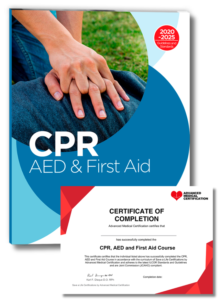
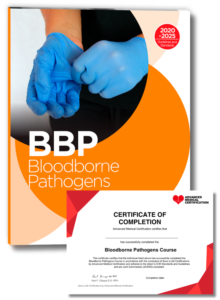
Our free courses provide essential life-saving skills for individuals, health care professionals, and first responders. Whether you’re looking to improve your emergency response knowledge or fulfill workplace training requirements, our comprehensive courses equip you with the skills needed to act confidently in critical situations.
By enrolling in our free courses, you gain access to expert-led training, instructional videos, and interactive course materials that ensure a strong understanding of key emergency response techniques. Upon completion, you will receive a Course Completion Certificate at no cost.
Whether you are a nursing student, a practicing physician, a paramedic, or someone just breaking into healthcare, BLS, ACLS, and PALS certifications are not optional extras anymore. They are the baseline. They are what hospitals, clinics, and employers check before they let you anywhere near a patient.
The good news? You can now get all three certifications online, in a matter of hours, with an instant digital certificate issued the moment you pass your exam, through Save a Life by nhcps.com
But here is the thing most people get wrong: not all certification providers are equal. And choosing the wrong one could mean your certificate gets rejected on day one of your new job.
Stay with me. I am going to walk you through exactly what BLS, ACLS, and PALS courses cover, who needs them, how to get certified fast, and the top accredited providers you can trust in 2026.
Let us get into it.
Quick Overview: BLS, ACLS and PALS Courses Comparison
| Feature | BLS | ACLS | PALS |
|---|---|---|---|
| Full Name | Basic Life Support | Advanced Cardiovascular Life Support | Pediatric Advanced Life Support |
| Who Needs It | Nurses, students, first responders, all healthcare workers | Doctors, ER nurses, ICU staff, paramedics | Pediatric nurses, pediatricians, ER staff treating children |
| Focus Area | CPR, AED, choking relief for all ages | Cardiac arrest, ECG, advanced medications, defibrillation | Pediatric emergencies, infant and child resuscitation |
| Prerequisite | None | BLS certification recommended | BLS certification recommended |
| Certification Validity | 2 Years | 2 Years | 2 Years |
| Average Course Time | 1 to 2 Hours | 1 to 3 Hours | 1 to 3 Hours |
| Available Online | Yes | Yes | Yes |
| Instant Digital Certificate | Yes | Yes | Yes |
| CME/CE Credits | Up to 4 Credits | Up to 8 Credits | Up to 8 Credits |
What Are BLS, ACLS, and PALS Courses?
Let me break each one down in plain language, because understanding what you are signing up for matters before you invest your time and money.
BLS: Basic Life Support
Think of BLS as the foundation. It is the starting point for every healthcare professional and even many non-medical workers.
BLS teaches you how to recognize a life-threatening emergency, perform CPR on adults, children, and infants, use an AED (Automated External Defibrillator) correctly, and relieve choking in victims of all ages.
If you are a nursing student, a medical school applicant, a dental assistant, or a fitness trainer working with the public, your employer will almost certainly require a valid BLS certificate before you start.
ACLS: Advanced Cardiovascular Life Support
ACLS is where things get more serious. This is the course for medical professionals who might be the first responder to a cardiac arrest, a stroke, or a severe cardiac emergency.
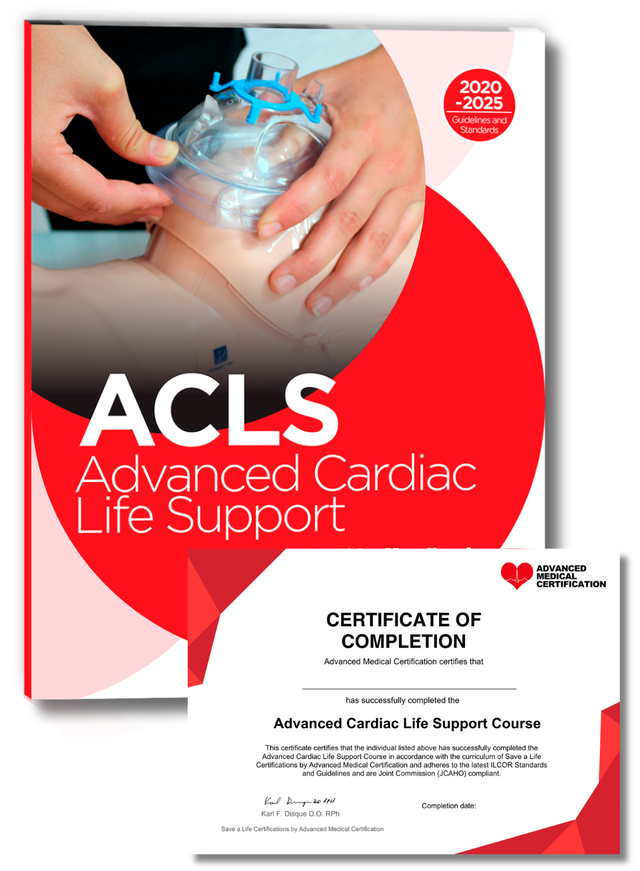
ACLS covers heart physiology and cardiac rhythms, ECG and arrhythmia interpretation, advanced airway management and intubation, emergency pharmacology and drug protocols, and systematic response algorithms for cardiac arrest and post-resuscitation care. Advanced Medical Certification offers one of the most comprehensive online ACLS courses available, with study videos and free practice exams built in.
Doctors, ER nurses, paramedics, ICU staff, and anesthesiologists are typically required to hold a current ACLS certification. Some nursing programmes even require it before graduation.
PALS: Pediatric Advanced Life Support
PALS is the equivalent of ACLS but specifically designed for pediatric emergencies. This is not a course about treating smaller adults. Children respond to illness and trauma differently, and PALS trains you to recognize and respond to those differences.
PALS covers pediatric assessment and early warning signs, shock identification and management in children, respiratory emergencies in infants and children, pediatric cardiac arrest protocols, and emergency medication dosing for pediatric patients.
Any healthcare provider who works with children in a clinical setting, from the emergency room to the ICU to a pediatric ward, needs a current PALS certification. The American Heart Association outlines the full ACLS and PALS course options on their official site if you want to review the official programme standards before enrolling.
Why Getting BLS, ACLS and PALS Certified in 2026 Is a Career Game-Changer
Getting certified is not just about ticking a box for your employer. There are real, tangible benefits that directly affect your career and your ability to save lives.
1. You Become Immediately Employable
Most hospitals will not even schedule your first interview without confirmed certifications. Walking in with current BLS, ACLS, and PALS cards eliminates the biggest barrier between you and getting hired.
2. You Are Prepared for Real Emergencies
Emergencies do not wait for you to look something up. These courses train you to respond fast, correctly, and confidently when minutes, or even seconds, matter.
3. You Earn CME and CE Credits
Accredited BLS, ACLS, and PALS courses offer up to 8 AMA PRA Category 1 Credits per course. That means you are not just getting certified, you are also satisfying continuing medical education requirements at the same time.
4. Your Certificate Is Valid for Two Years
Once you pass, your certification covers you for two full years. And when it is time to renew, online recertification courses are even shorter and faster than the initial certification.
5. You Can Get Certified From Anywhere
Online courses mean you can study at midnight between shifts, finish during a lunch break, or complete the course from home on a weekend. No classroom required. No driving across town. No rescheduling your entire week.
Important: The 2026 curriculum for all three certifications has been updated to align with the latest ILCOR and AHA guidelines. ProMed Certifications updates their curriculum immediately when new ILCOR consensus is published, making them one of the safest choices if staying current with 2026 guidelines matters to your employer. If you took these courses more than two years ago, your old card is no longer valid. You need to recertify now.
Who Should Take BLS, ACLS and PALS Courses?
Let me be direct. These certifications are not only for doctors. Here is a breakdown of exactly who needs each one:
BLS Certification Is For:
Registered nurses, nursing students, medical students, dental hygienists, physical therapists, occupational therapists, EMTs, first responders, personal trainers, lifeguards, and teachers working in schools with medical needs programmes.
ACLS Certification Is For:
Physicians, emergency room nurses, ICU nurses, paramedics, respiratory therapists, anesthesiologists, cardiologists, and any healthcare professional who could be the first on scene in a cardiac emergency.
PALS Certification Is For:
Pediatric nurses, pediatricians, emergency responders working with children, neonatal ICU staff, pediatric ICU staff, and ER doctors and nurses who regularly treat patients under the age of 18.
What Most Applicants Don’t Know: Many hospitals now require all three certifications, not just one. Getting your BLS, ACLS, and PALS bundle together is often cheaper than buying each course separately. ACLSNow offers a popular combo package where ACLS and PALS come with a free BLS course included, making it one of the most cost-effective options on the market.
What You Need Before You Start Your Course
The beauty of online BLS, ACLS, and PALS courses is that the barrier to entry is very low. Here is everything you need to get started:
A Valid Email Address
Your course materials, exam results, and digital certificate will all be delivered to your email. Use one you check regularly.
A Device With Internet Access
All courses are accessible via desktop, laptop, tablet, or mobile phone. You do not need any special software.
Payment for Your Course
Course prices vary by provider, but typically range from around $20 to $175 per certification. Bundle deals can reduce the total cost significantly. Look for providers offering a money-back guarantee in case your certificate is not accepted.
Basic Medical Background (for ACLS and PALS)
You do not need to pass a separate prerequisite test, but having your BLS certification before attempting ACLS or PALS is strongly recommended. Most platforms also offer free preparatory materials to help you review ECG reading and pediatric assessment before your exam.
Time to Complete the Course
BLS can be completed in as little as 1 hour. ACLS and PALS typically take 1 to 3 hours depending on how much you use the study materials. Plan your time accordingly.
Step-by-Step: How to Get Your BLS, ACLS or PALS Certificate Online
Here is exactly how the process works from start to certificate in hand:
Step 1: Choose an Accredited Provider
This is the most important step. Not every online certification site is created equal. Choose a provider that is accredited, follows current AHA and ILCOR guidelines, offers AMA PRA Category 1 Credits, and comes with a money-back acceptance guarantee.
More on the top providers below.
Step 2: Create Your Student Account
Register with your name and email address. This takes less than two minutes on most platforms. Your account gives you unlimited access to study materials, practice exams, and your final certificate.
Step 3: Study the Course Materials
Access your study guide, skills videos, algorithm charts, and audiobooks. Take your time here. The exam questions are based directly on these materials. Use the free practice tests to prepare before sitting the actual exam.
Step 4: Take the Certification Exam
For ACLS, you need to answer 50 questions and score at least 84% to pass. For BLS and PALS, score thresholds vary slightly by provider but typically require 70% to 80%. Most platforms offer unlimited exam retakes at no extra cost.
Step 5: Receive Your Instant Digital Certificate
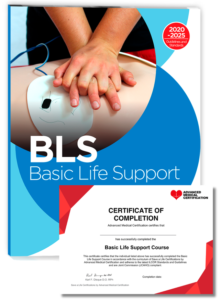
The moment you pass, your digital provider card is available for immediate download. This is the same card format as a physical card and is accepted by employers for credentialing purposes. United Medical Education is well known for issuing the fastest instant digital provider cards in the industry, with zero wait time after your exam. A hard-copy card is typically mailed to you within a few days.