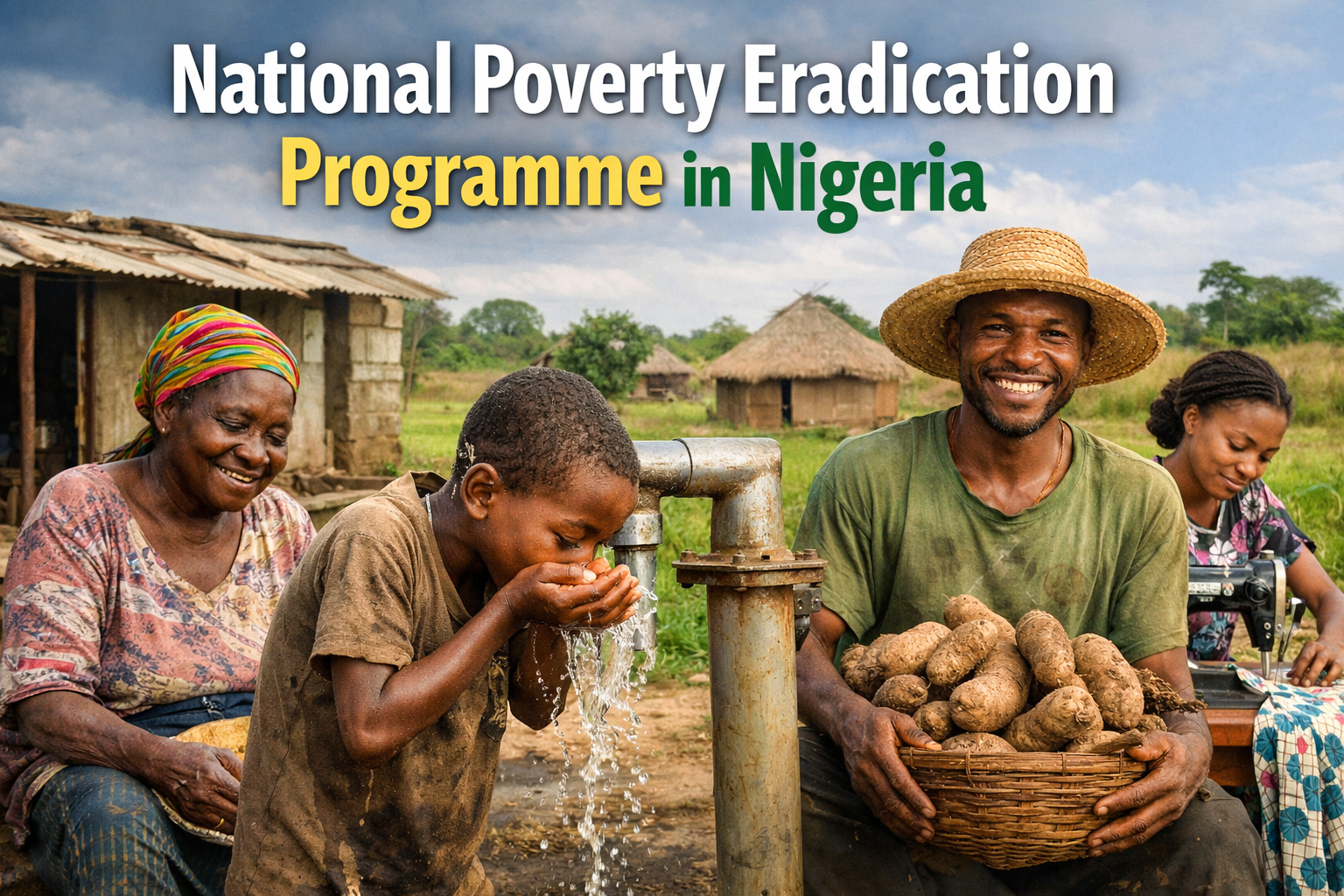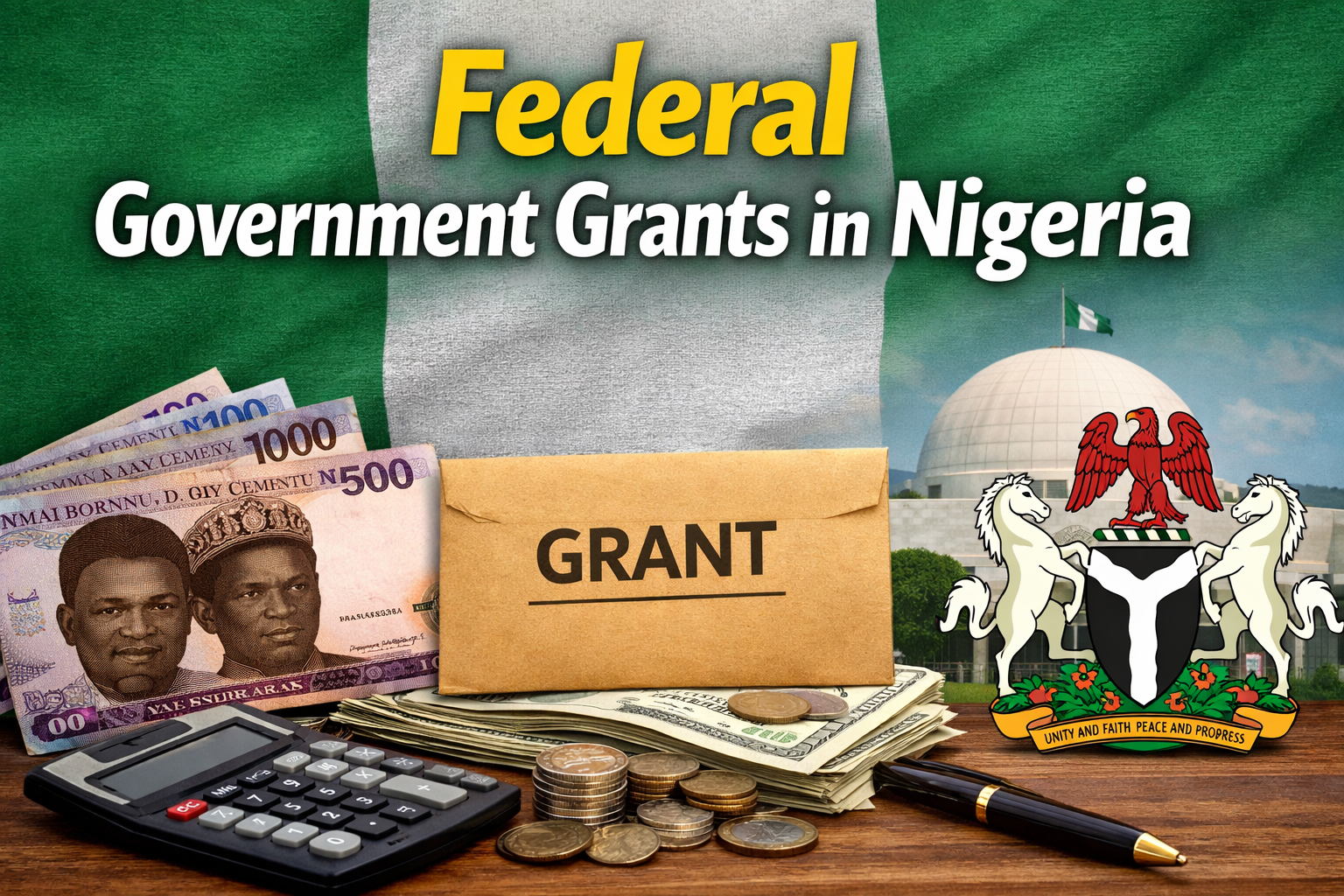
If you have been searching for a federal government grant in Nigeria, you are definitely not alone. Every year, thousands of Nigerians from different walks of life including students, small business owners, farmers, young entrepreneurs, and community organizations look for ways to access free government funding. The good news is that the Nigerian government, through various ministries, departments, and agencies (MDAs), offers real and verifiable grant programs that do not require repayment.
This guide is going to walk you through everything you need to know. We will cover what federal government grants actually are, the top programs currently available, who is eligible, the documents you need, and a step-by-step process for applying. We will also share some tips to help you avoid scams and increase your chances of getting approved.
Whether you are a youth looking to start a business, a farmer needing funds for inputs, or a woman entrepreneur ready to scale, there is likely a federal government grant program in Nigeria designed for you. Let us break it all down.
What Is a Federal Government Grant in Nigeria?
A federal government grant in Nigeria is a sum of money given by the Nigerian government to qualified individuals, businesses, cooperatives, or organizations for specific purposes. Unlike a loan, a grant does not need to be paid back, as long as the recipient meets the conditions attached to the funding.
These grants are funded by the federal budget and disbursed through government agencies such as the Bank of Industry (BOI), the Central Bank of Nigeria (CBN), the Small and Medium Enterprises Development Agency of Nigeria (SMEDAN), the Federal Ministry of Youth Development, and many others. The primary goal of these programs is to reduce poverty, create jobs, boost entrepreneurship, promote innovation, and drive economic development across the country.
It is important to understand that grants and loans are different things. A grant is non-repayable financial support tied to specific outcomes, while a loan must be repaid with interest over time. Some government programs in Nigeria are purely grants, while others are structured as low-interest loans or a combination of both.
Why the Nigerian Federal Government Offers Grants
Nigeria has one of the largest youth populations in the world, with millions of young people entering the job market every year. At the same time, unemployment remains a serious challenge. The federal government recognized that providing access to capital is one of the most effective ways to create jobs and stimulate local economies.
The grants are part of a broader government strategy to support sectors like agriculture, manufacturing, technology, and creative industries. They are also designed to promote financial inclusion, helping people who cannot access traditional bank loans to still build businesses and improve their lives.
Beyond business, the government also channels grants toward education, community development, youth empowerment, women inclusion, and support for people with disabilities. In recent years, Nigeria has significantly increased the number of official grant portals and digital platforms to make the application process easier and more transparent.
Top Federal Government Grant Programs in Nigeria for 2025
There are several active grant programs under the Nigerian federal government umbrella. Below are some of the most popular and reliable ones you should know about.
1. Nigeria Youth Investment Fund (NYIF)
The Nigeria Youth Investment Fund, popularly known as NYIF, is one of the most talked-about federal government grants in Nigeria today. It was created by the Federal Ministry of Youth Development (FMYD) and is backed by the CBN, with disbursement handled by NIRSAL Microfinance Bank (NMFB).
The NYIF was set up to address the financial challenges young Nigerians face when trying to start or grow a business. It started with a seed capital of N110 billion and targets youths between the ages of 18 and 40. The fund provides access to low-interest loans and grants for youth-owned businesses operating in sectors such as agriculture, ICT, light manufacturing, creative industries, fashion, fisheries, livestock farming, and more.
One of the things that makes the NYIF attractive is its highly subsidized interest rate of 5% per annum, which is far below what commercial banks offer. Applicants also benefit from a grace period of up to 12 months before repayment begins.
Eligibility for NYIF:
- Must be a Nigerian citizen
- Must be between 18 and 40 years old
- Must possess at least a secondary school leaving certificate
- Must have a valid NIN and BVN
- Must have a fundable business idea or an existing enterprise
- Must not have unpaid loans from NMFB or CBN intervention programs
You can begin your application by visiting the official NYIF application portal or the Federal Ministry of Youth Development website. Create an account, fill in your personal and business details, upload the required documents, and submit your application.
2. AGSMEIS (Agri-Business/Small and Medium Enterprise Investment Scheme)
The Agriculture, Small and Medium Enterprise Investment Scheme, commonly called AGSMEIS, is a CBN intervention program targeted at entrepreneurs in agriculture and other key sectors of the Nigerian economy. The scheme is managed through NIRSAL Microfinance Bank and offers affordable funding to qualified business owners.
AGSMEIS charges an interest rate of 9% per annum and offers a repayment tenure of up to 7 years, including an 18-month moratorium on principal repayments. This makes it one of the more flexible and accessible government grant and loan programs available in Nigeria today.
One unique requirement of AGSMEIS is that applicants must complete a mandatory entrepreneurship training program at a CBN-accredited Enterprise Development Institute (EDI) before they can apply. Once you finish the training, you receive a certificate that makes you eligible to proceed with the AGSMEIS loan application through NMFB.
Key eligibility conditions include:
- Must be a Nigerian citizen
- Must complete CBN-accredited entrepreneurship training
- Must have no outstanding loans at any financial institution
- Priority is given to women-owned businesses, young entrepreneurs, and businesses with growth potential
To apply, visit the NIRSAL Microfinance Bank official portal and follow the AGSMEIS application instructions.
3. SMEDAN Conditional Grant Scheme (CGS)
The Conditional Grant Scheme, known as CGS, is a federal government initiative managed by the Small and Medium Enterprises Development Agency of Nigeria. It specifically targets nano and micro enterprises at the local government area level across Nigeria.
Under this program, eligible businesses receive a grant of N50,000. The condition attached is that the business must hire at least one additional employee after receiving the funds. This focus on job creation at the grassroots level is what makes the CGS unique.
The sectors covered include trade, services, light manufacturing, and other small-scale activities. Priority is often given to women, youth, and people with disabilities.
Documents required for SMEDAN CGS:
- Valid government-issued ID (National ID, voter’s card, or international passport)
- Proof of business ownership or CAC registration
- Evidence of business address
- Bank account details linked to the owner or business
- Brief business proposal
Apply directly through the SMEDAN official website by navigating to the Conditional Grant Scheme section when the application window is open.
4. YouWiN! Connect
YouWiN! Connect is one of Nigeria’s more competitive federal government grant programs. It targets young entrepreneurs who have viable business ideas and want to scale them. The program is built around business plan competitions, and winners receive non-repayable grants based on the strength of their proposals.
In addition to the grant funding, participants receive mentorship, business training, and access to professional networks. This combination makes YouWiN! particularly valuable for early-stage entrepreneurs who need more than just money to succeed.
The program has historically been managed under the Federal Ministry of Finance and other government agencies. Interested applicants should monitor official government portals for when the next cycle opens.
5. Nigeria Youth Futures Fund (NYFF)
The Nigeria Youth Futures Fund is a five-year collaborative program involving LEAP Africa, the MacArthur Foundation, the Ford Foundation, and the Luminate Group. While not a purely government grant in the traditional sense, it receives federal backing and operates in alignment with national youth development goals.
The NYFF offers three types of grants: small grants for grassroots individuals and community-based organizations, development grants for youth-led organizations, and catalyst grants for innovation hubs and civic organizations. The fund focuses on governance, depolarization, social inclusion, gender equality, and support for people with disabilities.
For the 2025 and 2026 cycles, the fund is open to both individuals and organizations working on youth empowerment across Nigeria. You can apply through the LEAP Africa grant application portal.
6. BOI (Bank of Industry) Grant and Loan Programs
The Bank of Industry is one of Nigeria’s oldest and most trusted development finance institutions. BOI manages several federal government-backed funding programs targeting businesses in manufacturing, agriculture, and technology. These range from nano-grants to SME loans of up to N50 million, depending on the specific program and the scale of the business.
BOI also runs specialized programs like the BOA Grant for Agribusinesses, as well as funding windows for women entrepreneurs and youth-focused businesses. The application process is typically done through BOI offices nationwide or through the official BOI website.
Visit the Bank of Industry official website for current grant and loan opportunities.
7. FGN-ALAT Digital Skillnovation Fund
This is a newer federal government grant in Nigeria that focuses on digital skills and technology-driven entrepreneurship. It targets Nigerians who want to build or scale businesses in the digital space, including e-commerce, fintech, edtech, and other tech-enabled sectors. The fund reflects the government’s growing investment in digital literacy and innovation as tools for economic growth.
General Eligibility Requirements for Federal Government Grants in Nigeria
While each grant program has its own specific requirements, there are some general eligibility criteria that apply across most federal government grant programs in Nigeria. These include:
- Being a Nigerian citizen or having a business registered under Nigerian law
- Having a valid National Identification Number (NIN)
- Having a Bank Verification Number (BVN) linked to a functional bank account
- Meeting the age requirement of the specific program (usually 18 to 40 for youth programs, or 18 to 45 for broader programs)
- Having a viable business plan or project proposal
- Registering your business with the Corporate Affairs Commission (CAC) if applicable
- Being tax compliant and able to provide a Tax Clearance Certificate where required
- Not having unpaid loans from other government intervention programs
Some programs also prioritize specific groups such as women-owned businesses, people with disabilities, businesses in underserved rural areas, or entrepreneurs in particular sectors like agriculture and manufacturing.
Documents You Need to Apply for a Federal Government Grant in Nigeria
Before you start any application, it is important to have your documents ready. Incomplete documentation is one of the main reasons grant applications get rejected. Here is a list of documents that are commonly required:
- Valid government-issued ID (National ID card, voter’s card, driver’s license, or international passport)
- National Identification Number (NIN) slip
- Bank Verification Number (BVN)
- CAC registration certificate (for registered businesses)
- Tax Identification Number (TIN)
- Local Government of Origin certificate
- Birth certificate or other proof of age
- A well-written business plan or project proposal
- Recent financial statements or proof of revenue (for existing businesses)
- Proof of business address (utility bill or LGA certificate)
- Passport photographs
For agriculture-related grants, you may also need documents showing ownership or lease of land. For education-related grants, academic transcripts or enrollment letters may be required. Always check the specific requirements for the program you are applying to before submitting.
How to Apply for a Federal Government Grant in Nigeria: Step by Step
The application process for most federal government grants in Nigeria follows a similar structure. Here is a step-by-step guide to help you navigate it successfully:
Step 1: Identify the Right Grant for You
The first thing you need to do is figure out which grant program fits your situation. Are you a young entrepreneur? Look at the NYIF or AGSMEIS. Are you a micro business owner at the LGA level? The SMEDAN CGS might be your best option. Are you a farmer? Consider the Anchor Borrowers Programme or BOA agribusiness grants. Matching your profile to the right program significantly improves your chances.
Step 2: Visit the Official Government Portal
Always apply through official government websites. The main federal grant and loan portal is fedgrantandloan.gov.ng. Other important portals include the SMEDAN website, the NMFB portal for NYIF and AGSMEIS, and the BOI official website. Avoid third-party agents who claim to help with applications for a fee, as these are often scams.
Step 3: Create an Account and Register
Most grant portals require you to create an account before you can apply. You will need to provide your name, phone number, email address, NIN, and BVN during registration. Make sure you use a valid email address and phone number because all important updates and shortlist notifications are sent through these channels.
Step 4: Fill Out the Application Form
Take your time filling out the application form. Provide accurate and detailed information about yourself, your business, and your funding needs. Many programs ask for a business plan as part of the form, so be prepared to explain your business idea, target market, financial projections, and how the grant will be used.
Step 5: Upload Your Documents
Scan all required documents clearly before uploading them. Make sure each document is current and in the correct format specified by the portal. Common formats accepted include PDF and JPEG. The absence of even one document can get your application disqualified.
Step 6: Submit and Wait for Review
After submitting your application, the relevant agency will review it. This process can take anywhere from 2 to 6 months depending on the program and the volume of applications received. You may also be contacted for additional verification or to attend a physical assessment.
Step 7: Check Your Status
Log in to your portal account regularly to check your application status. Shortlisted candidates are usually notified by email or SMS. Also monitor the official social media pages of agencies like BOI, SMEDAN, and the Federal Ministry of Youth Development for announcements.
Step 8: Receive Funds and Comply with Conditions
Once approved, funds are disbursed directly to your bank account. For grant programs, you are expected to use the money for the stated purpose. Some programs will conduct follow-up monitoring to confirm compliance. Misusing grant funds can lead to penalties and legal consequences.
Tips to Increase Your Chances of Getting a Federal Government Grant in Nigeria
Competition for federal government grants in Nigeria can be intense, especially for popular programs like NYIF and AGSMEIS. Here are some practical tips to help your application stand out: