Last Updated: 19 May 2026 at 11:28 PM
Updated By: Uwandu Chinwe
- Who Is Maurice Ashley?
- Why the Fellowship Was Created
- The Fellowship at a Glance
- What the Fellowship Provides
- Financial Grants for Chess Development
- Mentorship from GM Maurice Ashley
- Connection to a Global Network
- The Give-Back Component
- Who Is Eligible: The 2026 Requirements
- The 2025 Inaugural Class: A Closer Look
- The Application Deadline for 2026
- Tips for Building a Strong Fellowship Application
- The Broader Mission: Building a Pipeline for Black Grandmasters
- About the US Chess Trust
- How to Apply for the Maurice Ashley Fellowship 2026
- Final Thoughts
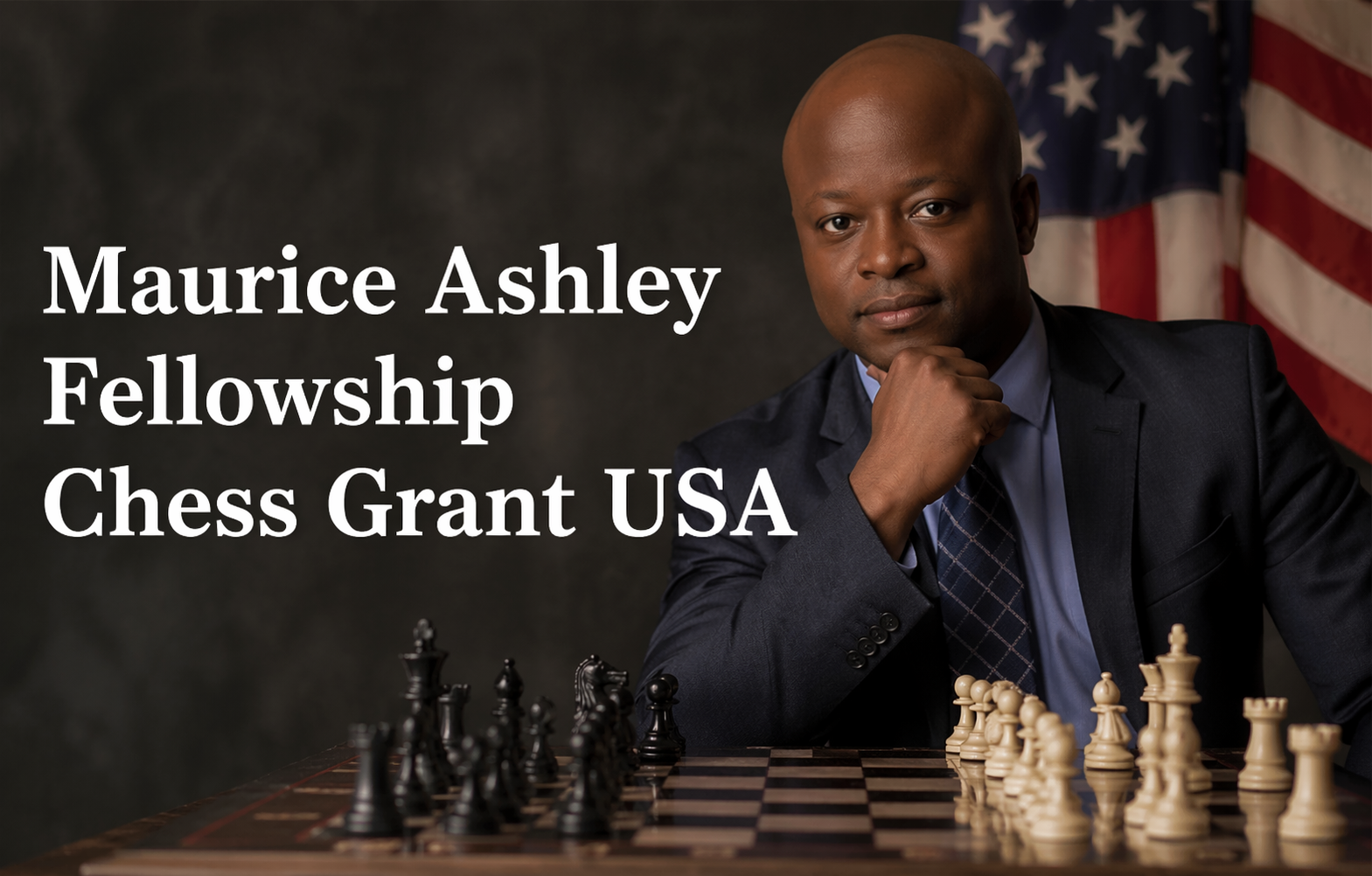
If you are a young Black chess player in the United States with serious ambitions in the game, or if you know someone who fits that description, the Maurice Ashley Fellowship 2026 is an opportunity that deserves your full attention. This distinguished fellowship was created to identify, fund, and mentor exceptional young chess talent from underserved communities across the country, and applications for the 2026 round are now open with a deadline of June 1, 2026.
The fellowship is named after and founded by Grandmaster Maurice Ashley, the first African American to earn the title of chess Grandmaster, a milestone he achieved in 1999 after years of relentless dedication and self-driven study. For Ashley, creating this fellowship is deeply personal. He built his career without a coach, without access to elite training resources, and without the institutional support that top players from wealthier backgrounds often take for granted. He knows firsthand what talented young players from underserved communities are up against, and the fellowship is his way of making sure the next generation does not have to fight those same battles alone.
In this article, we will walk through everything you need to know about the Maurice Ashley Fellowship 2026, including who founded it and why, what the fellowship provides, who is eligible to apply, what the selection process looks like, who has received it before, and how to submit your application before the June 1 deadline.
Who Is Maurice Ashley?
To understand why this fellowship matters so much, you need to understand the man behind it. Maurice Ashley was born on March 6, 1966, in St. Andrew, Jamaica. He moved to the United States at age twelve, settling in the Brownsville neighborhood of Brooklyn, New York. It was his older brother who first introduced him to chess, and what began as a casual pastime quickly became a serious pursuit.
During his time at Brooklyn Technical High School, Ashley failed to make the school chess team. Rather than giving up, he used that setback as motivation and threw himself deeper into the game, joining the Black Bear School of Chess, a group of African American chess enthusiasts from Brooklyn. By 1986, he had earned the rank of National Master. He went on to study Creative Writing at the City College of New York, where he also captained the school’s chess team.
While still developing his own game, Ashley took on a coaching role that would become one of the most celebrated chapters in American chess history. He began coaching the Raging Rooks, a chess team at Adam Clayton Powell Junior High School in Harlem. In 1991, the Raging Rooks traveled to the National Junior High School Championships in Dearborn, Michigan, and won the national title, making front-page news in The New York Times. The story, headlined “Harlem Teenagers Checkmate a Stereotype,” captured the attention of the country and forever changed how many people thought about who could succeed at chess.
Ashley went on to coach the Dark Knights at Harlem’s Mott Hall School, a team that went on to win multiple national championships. Through his coaching work, he demonstrated that Black youth from inner-city communities could not only play chess at the highest levels but dominate it.
In 1993, Ashley earned the title of International Master. He then made the decision to pause his coaching career and focus entirely on pursuing the Grandmaster title, the highest achievement in chess. In 1999, after years of concentrated study and international competition, he beat Adrian Negulescu and completed the requirements for the Grandmaster title. He became the first African American, and the first person of Black African heritage, to achieve that distinction. At the time, there were fewer than 500 grandmasters in the entire world.
Since then, Ashley has had an extraordinary career as a chess ambassador, commentator, author, and educator. He has provided live commentary for some of the most prestigious chess events in the world, including the legendary 1996 and 1997 Kasparov versus Deep Blue matches, several US Chess Championships, and events on the Grand Chess Tour. He was inducted into the US Chess Hall of Fame in 2016. In 2024, he published his book “Move By Move: Life Lessons On and Off the Chessboard,” which reached Amazon’s bestseller list. He also appeared on The Oprah Podcast with Oprah Winfrey and organizational psychologist Adam Grant, a conversation about chess, hidden potential, and the power of mentorship that introduced his story to an entirely new global audience.
Throughout all of this, Ashley has never stopped thinking about access and equity in chess. The launch of the Maurice Ashley Chess Fellowship in 2024 represents the most direct and structured expression of that commitment to date.
Why the Fellowship Was Created
The numbers tell a stark story. In the entire history of American chess, only two African Americans have ever attained the grandmaster title. The first is Maurice Ashley himself in 1999. The second is Brewington Hardaway, a young New York player who recently completed the requirements for the GM title. That is it. Two grandmasters from the African American community across all of American chess history, in a country of more than forty million Black Americans.
This underrepresentation is not a reflection of ability or intelligence. It is a reflection of access. Elite chess development at the highest levels requires access to high-quality coaching, the ability to travel to competitive tournaments both nationally and internationally, money for entry fees and equipment, time to study, and a network of experienced mentors and peers who can help a player navigate the complex path toward becoming a grandmaster. For young players from underserved communities, these resources are often simply out of reach.
Ashley has spoken openly about his frustration. Even as he celebrated the 25th anniversary of his own Grandmaster title in 2024, he felt troubled that he was still, for most of that period, the only breakthrough. He knew there was an enormous well of untapped talent in Black communities across the United States, talent that was going unrealized not because the players were not capable, but because the doors were not open.
The Maurice Ashley Chess Fellowship was created to open those doors. By providing selected young players with direct financial support, elite coaching connections, mentorship from Ashley himself, and access to a global network of chess professionals and sponsors, the fellowship aims to create a genuine pipeline for Black chess talent to reach the highest levels of the game.
The Fellowship at a Glance
The Maurice Ashley Chess Fellowship, officially abbreviated as MACF, is administered by the US Chess Trust. The Trust is a 501(c)(3) nonprofit organization that was founded in 1967 and is one of the oldest sports charities in the United States. By placing the fellowship under the Trust’s administration, Ashley ensured it has a professional, experienced, and credible institutional home that can manage the awards process, handle funds responsibly, and ensure the program’s long-term sustainability.
The fellowship was seeded with a personal contribution of $20,000 from GM Ashley himself, a gesture that reflects the depth of his personal commitment to the program. Chess.com also stepped up early to pledge free premium memberships to all fellowship recipients. Additional donors and sponsors have continued to support the fund, with ongoing contributions from individuals and organizations who share Ashley’s belief that talent in Black communities deserves a fair shot at reaching the top of the game.
The awards committee brings together extraordinary chess expertise. It consists of GM Maurice Ashley himself, four-time US Chess Champion GM Fabiano Caruana, one of the strongest chess players in the world, and Candidate Master Rochelle Ballantyne, a well-known figure in American chess and a symbol of what is possible for young Black women in the game. Ballantyne is perhaps best known from the documentary Brooklyn Castle, which followed her rise through the chess world. Having these three voices on the selection committee ensures that fellowship decisions are made by people who understand both the technical demands of elite chess and the social realities facing young players from underserved backgrounds.
What the Fellowship Provides
The Maurice Ashley Chess Fellowship is not a token gesture. It provides a substantive package of support designed to address the real financial and professional barriers that prevent talented young players from reaching their potential.
Financial Grants for Chess Development
The centerpiece of the fellowship is financial support. Fellows receive grants specifically designed to cover the essential costs of elite chess development. This includes funding for coaching from high-level chess professionals, tournament entry fees, travel to national and international competitions, and chess equipment. The amounts vary based on the specific needs and situations of each fellow, but the 2025 inaugural class showed the range clearly. Brewington Hardaway, already a Grandmaster, received a fellowship award of $10,000. Jacorey Bynum, a seventeen-year-old National Master with a USCF rating of 2301, received an $8,000 fellowship. Ayden Spellman-Robinson, a ten-year-old with over 150 tournaments played, received a $5,000 fellowship. These are meaningful amounts that can make a genuine difference in a young player’s ability to compete at the level their talent deserves.
Mentorship from GM Maurice Ashley
Beyond the money, fellows receive direct mentorship from Grandmaster Maurice Ashley. This is not a ceremonial association with a famous name. It is genuine guidance from someone who has walked the path of becoming a grandmaster in an environment that was not designed to support him, who understands the psychological as well as the chess-related challenges of competing at the highest levels, and who has spent decades thinking about how to give young players from underserved communities the tools they need to succeed. Access to that kind of mentorship is genuinely rare and genuinely valuable.
Connection to a Global Network
Fellows are connected to a global network of mentors, peers, and sponsors in the chess world. This kind of network matters enormously in professional chess, as it does in most competitive fields. Knowing the right people, being visible to the right coaches, sponsors, and tournament organizers, and having peers at a similar level to train and compete with are all factors that accelerate development. The fellowship actively works to build these connections for its recipients rather than leaving them to figure it out on their own.
The Give-Back Component
One of the most distinctive elements of the fellowship is its community engagement requirement. Each fellow is expected to develop and carry out a give-back project that is designed to inspire and support the next generation of young players from underrepresented communities. This component reflects Ashley’s broader philosophy about what success in chess should mean. It is not enough to make it to the top yourself. You should reach back and make it easier for others to follow. For young fellows, this give-back component is also a meaningful educational experience in leadership, community engagement, and using one’s platform for positive impact.
Who Is Eligible: The 2026 Requirements
The Maurice Ashley Fellowship 2026 is specifically focused on young Black chess players. The fellowship supports young Black chess players who demonstrate exceptional promise, discipline, and a passion for the game. Applicants must be under the age of 21, as the fellowship is designed for players who are still in the developmental stage of their chess careers and who have the time and trajectory to reach professional or elite levels of the game with the right support.
The fellowship looks for serious applicants with a commitment to growth and a love for the game. This means the ideal applicant is not just someone who plays chess recreationally or casually. You should be actively competing, have a track record in rated tournaments, be working to improve your game in a structured way, and have clear ambitions about where you want your chess career to go.
The fellowship is specifically targeted at players from underserved communities in the United States. This focus reflects the fellowship’s core purpose, which is to address the structural barriers that prevent talented players from these communities from accessing the resources and support they need to compete at elite levels. If you have exceptional chess talent and have been limited by your access to coaching, tournament funding, or other resources, this fellowship was built for you.
There is no requirement that you already hold a particular USCF or FIDE rating, but the fellowship is competitive and the selection committee is looking for players who have demonstrated genuine capability and serious intent. The 2025 inaugural class included a Grandmaster, a National Master with a rating of 2301, and a ten-year-old with over 150 competitive tournaments already under his belt. That range shows the fellowship is open to players at different stages of development, as long as the promise and commitment are evident.
The 2025 Inaugural Class: A Closer Look
Looking at who was selected in 2025, the inaugural year, gives a clear picture of what the fellowship is looking for and what it can do for a recipient’s career.
Brewington Hardaway, based in New York, earned all of his International Master and Grandmaster norms in just twenty-one months, a remarkably rapid progression through the highest levels of American chess. His selection reflected the fellowship’s desire to support players right at the moment of breakthrough, helping them sustain their momentum rather than stall for lack of resources.
Jacorey Bynum from Florida had earned the title of National Master and carried a USCF rating of 2301 at the time of his selection. He had developed through the National Scholastic Chess Foundation program and had received mentorship from Robert McKenzie. He was even awarded a proclamation by his local mayor at age twelve. His story illustrates the kind of recognized local talent that the fellowship is designed to bring to the national stage.
Ayden Spellman-Robinson from Brooklyn learned chess through an after-school program at I.S. 118 and had already competed in more than 150 tournaments by the time he was ten years old. His selection signals that the fellowship is also watching for the youngest players who show exceptional early promise, understanding that investment at an early age, when directed toward genuinely gifted players, can have a compounding impact over time.
The Application Deadline for 2026
The deadline for the Maurice Ashley Fellowship 2026 is June 1, 2026. This is a firm deadline, and given how significant and competitive this fellowship is, it is worth giving yourself enough time to put together a thoughtful and complete application rather than rushing it at the last minute.
Applications are submitted online through the US Chess Trust website. The application process is designed to be accessible rather than bureaucratically complex, in keeping with the fellowship’s mission of reaching players who may not have experience navigating formal grant applications. But that does not mean you should treat it casually. The selection committee is looking for serious applicants, and your application is your opportunity to show them who you are as a player and a person.
Tips for Building a Strong Fellowship Application
While the specific application questions may vary from year to year, here is what we know the selection committee cares about based on the fellowship’s stated values and selection criteria.
Demonstrate your chess record clearly. Include your current USCF rating, any titles you have earned (National Master, FIDE Master, etc.), the tournaments you have competed in, and any notable performances or results. The committee wants to see that you are actively competing and developing. If you have results you are proud of, highlight them specifically.
Articulate your goals honestly. The fellowship is looking for players with the expressed intention of reaching professional or elite levels of chess. Be honest and specific about where you want to go with your chess career. If you want to become a Grandmaster, say so. If you want to represent the United States internationally, say that. Generic statements like “I want to improve at chess” will not convey the seriousness and ambition the committee is looking for.
Talk about what is holding you back. The fellowship exists precisely because talented players from underserved communities face real structural barriers. Describe honestly what those barriers look like in your situation. Whether it is the inability to afford tournament travel, the lack of access to a high-quality coach, limited time to study because of other responsibilities, or simply not knowing how to navigate the professional chess world, sharing these realities helps the committee understand why you need this fellowship and why the support it provides would make a genuine difference in your development.
Show your character and commitment. Ashley has said that this fellowship is about belief, about investing in kids who deserve a shot at greatness. The committee is not only evaluating your chess rating. They are evaluating whether you are the kind of person who will make the most of this opportunity, who will work hard, who will give back to their community, and who represents the values the fellowship stands for. Share your story. Share what chess means to you personally. Let the committee see who you are beyond the rating points.
If you have any existing chess accomplishments to share, such as tournament awards, school chess titles, recognition from your chess coach or club, or community involvement related to chess, include those details as well.
The Broader Mission: Building a Pipeline for Black Grandmasters
The Maurice Ashley Chess Fellowship is designed to do something that no individual player, however talented, can accomplish alone. It is designed to build a pipeline. Ashley’s vision is not just about helping three or four kids each year. It is about establishing a structural mechanism through which Black chess talent in America can be systematically identified, supported, and elevated over time, creating a culture and an infrastructure that makes it possible for many more Black players to reach the Grandmaster level in the coming decades.
Part of what makes this vision credible is the institutional foundation behind it. The US Chess Trust, with nearly sixty years of experience in chess development, brings administrative credibility and long-term staying power to the program. The involvement of GM Fabiano Caruana, one of the most respected active players in the world, and CM Rochelle Ballantyne, a role model for Black and female chess players alike, ensures that the fellowship has both elite chess credibility and genuine community connection.
Chess.com’s support with premium memberships for all fellows adds a practical modern dimension. Online chess training tools, databases, and communities have become essential components of elite chess development, and ensuring all fellows have access to premium resources on the world’s largest chess platform is a meaningful contribution to their development.
As the fellowship grows and attracts more donors, the expectation is that more fellows will be funded each year, the award amounts can increase, and the network of support around each fellow can deepen. In its inaugural year, the fellowship made three awards. As the program matures, the ambition is to reach and support many more players across the country.
About the US Chess Trust
For those who are not familiar with the institution administering this fellowship, the US Chess Trust is the official charitable arm of US Chess, the national governing body for the sport of chess in the United States. The Trust was founded in 1967 and holds 501(c)(3) nonprofit status. As one of the oldest sports charities in the country, it has a long track record of supporting chess development, educational programs, and initiatives that use chess as a tool for personal growth and community enrichment. By entrusting the MACF to the US Chess Trust, Ashley ensured the fellowship is run by professionals with deep expertise in chess development and the governance structures needed to manage charitable funds responsibly.
How to Apply for the Maurice Ashley Fellowship 2026
If you are a young Black chess player under 21 with serious ambitions in the game, do not wait to get your application together. The June 1, 2026 deadline will come faster than you think, and a rushed application will not represent your abilities and commitment as well as a carefully prepared one.
To access the application form and full details about the 2026 fellowship, visit the official application page through the US Chess Trust. You can submit your application directly through the Maurice Ashley Chess Fellowship Online Application page.
For more background on the fellowship, the inaugural class, and the vision behind the program, you can also visit the Maurice Ashley Chess Fellowship page on the US Chess Trust website.
If you want to read more about the announcement directly from US Chess, the official call for applications was posted on the US Chess website’s call for applications page.
Final Thoughts
The Maurice Ashley Fellowship 2026 is more than a chess grant. It is a statement about what is possible when someone who has made history decides to use their platform to change the odds for the next generation. Maurice Ashley spent decades proving that Black players belong at the top of the chess world. Now, through this fellowship, he is actively building the systems that can make that a reality for many more young players in the years ahead.
If you are a young Black chess player who has dreamed of competing at the highest levels of the game but has felt held back by limited access to coaching, tournament funding, or professional guidance, this fellowship was created with you in mind. The deadline is June 1, 2026. The selection committee includes some of the most respected figures in American chess. And the vision behind the program is nothing less than building a new generation of Black chess champions.
Start your application now. Take the time to tell your story clearly and honestly. Show the committee who you are as a player, as a person, and as someone who represents the future of American chess.
For more fellowship opportunities, scholarships, and grants for young athletes, students, and aspiring professionals around the world, keep exploring this blog. We cover funding opportunities from every corner of the globe, and we update regularly so you never miss a chance that could change your life.