
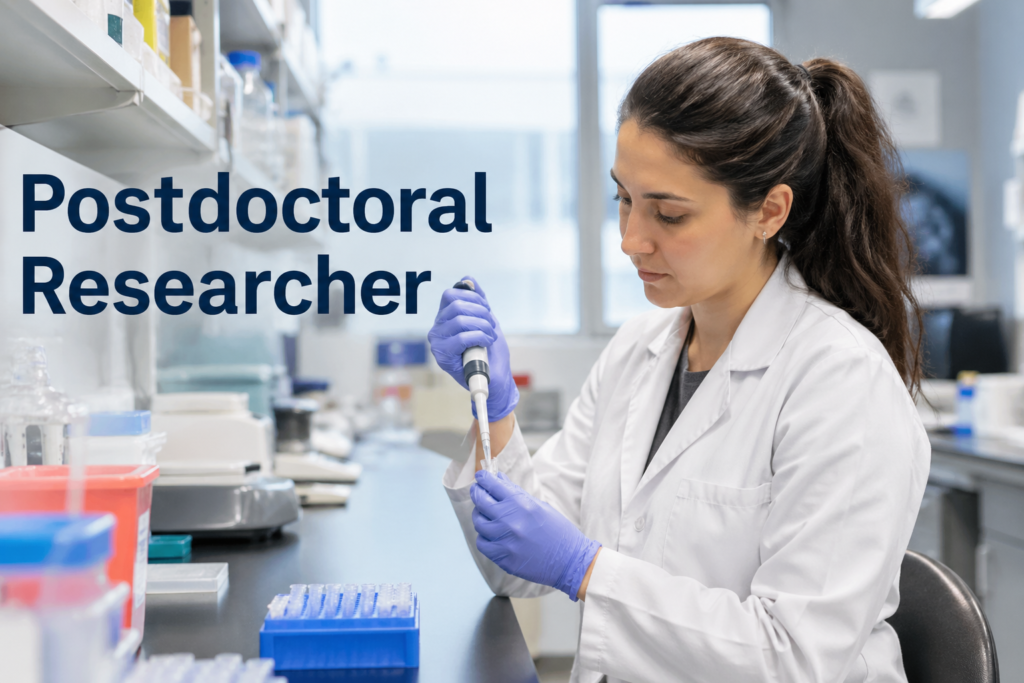
If you have recently completed your PhD or are about to finish your doctoral studies, you are probably weighing your options for what comes next. For many early-career researchers, the answer is a postdoctoral position. A postdoctoral researcher appointment, often simply called a postdoc, is widely seen as the next step after a PhD for those who want to pursue a career in academic research, scientific research, or even transition into high-level industry roles. In 2026, the landscape for postdoctoral researchers is busier than ever, with hundreds of funded positions opening at universities, research institutions, and national laboratories across the globe every month.

This guide is designed to walk you through everything you need to understand about postdoctoral researcher positions in 2026. Whether you are looking for positions in the United States, Europe, Canada, or elsewhere, this article covers what a postdoc is, why it matters, how salary and funding work, where to find open positions, which fellowships are available, and exactly how to put together an application that gets noticed.
What Is a Postdoctoral Researcher?
A postdoctoral researcher is someone who has earned a PhD or equivalent doctoral degree and is now conducting research under the supervision of a senior academic or principal investigator, usually at a university, hospital, research institute, or national laboratory. The postdoc period is meant to bridge the gap between completing a PhD and establishing yourself as an independent researcher. It is a training appointment that gives you time to build a publication record, develop new technical skills, expand your professional network, and strengthen your research profile before you apply for faculty positions, senior researcher roles, or positions in industry and government.
Postdoctoral appointments are typically temporary, lasting anywhere from one to five years, though the most common duration is two to three years. Most positions come with a salary or stipend, health insurance, and access to institutional resources like laboratory space, equipment, and library databases. Some postdocs are fully funded through research grants held by a principal investigator, while others are funded through competitive external fellowships that the researcher applies for independently.
It is important to understand that a postdoc is not a permanent academic job. It is a structured research training period, and while it is competitive and demanding, it is also one of the most intellectually rewarding phases of a research career. The skills and connections you build during a postdoc often determine the trajectory of your entire academic or research career afterward.
Why Pursue a Postdoctoral Position in 2026?
The research landscape in 2026 is evolving rapidly. Fields like artificial intelligence, machine learning, biomedical engineering, climate science, quantum computing, and genomics are attracting unprecedented levels of public and private funding. This means that the demand for qualified postdoctoral researchers is stronger than it has been in many years. Universities and research institutions are actively recruiting talented PhD holders to work on funded projects in these areas and many others.
Beyond the intellectual satisfaction of doing cutting-edge research, there are several concrete reasons to pursue a postdoc in 2026. First, most faculty positions at research universities still require candidates to have completed at least one postdoctoral appointment. Second, many industry research roles, particularly at technology companies, pharmaceutical firms, and national laboratories, prefer or require postdoctoral experience. Third, prestigious fellowships like the Marie Sklodowska-Curie Actions Fellowship, NIH-funded research positions, and European Research Council grants are providing postdocs with salaries and research budgets that are genuinely competitive. The financial barriers that once made postdoc life difficult are slowly improving, especially at top institutions.
Types of Postdoctoral Researcher Positions in 2026
Not all postdoc positions are the same. Understanding the different types of appointments will help you identify which kind of opportunity best matches your goals and circumstances.
Postdoctoral Associate or Research Associate
This is the most common type of postdoc appointment. In this arrangement, a university or research institution employs you directly, and your salary is paid from a research grant held by a faculty member or principal investigator. You work on that PI’s research project while also having some opportunity to develop your own ideas within the scope of the project. Your employment relationship is with the institution, which means you typically receive employee benefits including health insurance, retirement contributions, and paid leave.
Postdoctoral Fellow
A postdoctoral fellowship is usually awarded to the researcher themselves through a competitive application to a funding agency such as the National Institutes of Health, the National Science Foundation, or the European Commission. In this arrangement, the fellowship money comes directly to you or is managed on your behalf by the host institution. You typically have more freedom to design and pursue your own research agenda within the fellowship framework, though you still work under the mentorship of a senior researcher at the host institution.
Independent Postdoctoral Fellowship
Some of the most prestigious funding schemes, like the Marie Sklodowska-Curie Actions Postdoctoral Fellowships, the Banting Postdoctoral Fellowships in Canada, or the Humboldt Research Fellowships in Germany, support individual researchers in developing and leading their own research projects. These fellowships are highly competitive but come with generous funding, significant academic freedom, and the kind of career recognition that opens doors to senior positions faster than a standard postdoc appointment.
Industry Postdoctoral Fellowship
A growing number of companies, particularly in the pharmaceutical, biotechnology, and technology sectors, now offer structured postdoctoral programs. These are designed for PhD holders who want to transition into research careers in industry. Industry postdocs typically offer higher salaries than academic positions, but the research agenda is more closely tied to the company’s commercial goals. Companies like Google, Meta, Microsoft, and major pharmaceutical companies regularly post postdoc openings.
Postdoctoral Researcher Salary in 2026
One of the most common questions from PhD graduates considering a postdoc is how much they can expect to be paid. The answer varies considerably depending on your field, country, institution, and the source of your funding. But the trend in 2026 is toward higher compensation overall, which is good news for early-career researchers.
In the United States, many universities set their minimum postdoctoral salaries based on the guidelines published by the National Institutes of Health through the National Research Service Award program. As of the NIH announcement in March 2026, the minimum stipend for a postdoctoral researcher at the zero years of experience level is $63,480 per year for the 2026 fiscal year. Institutions with their own supplemental policies often pay above this level. For example, MIT has set its minimum postdoc salary at $71,000 for 2025, rising to $73,308 effective July 2026, with a maximum of $90,000.
At Harvard, the current minimum postdoc salary is $67,600 per year under ongoing negotiations. Cornell’s minimum for postdoctoral associates mirrors the NIH scale at $63,480 for the 2026 fiscal year, rising incrementally with years of experience. These figures represent base compensation; many positions also include health insurance, housing allowances at some institutions, childcare assistance, and access to professional development funds.
In Europe, salaries for postdoctoral researchers vary by country and funding scheme. The Marie Sklodowska-Curie Actions Postdoctoral Fellowship provides fellows with approximately 7,500 euros per month in total financial support, which includes a living allowance, a mobility allowance of around 710 euros per month, and a family allowance of 660 euros per month for those with dependents. This makes the MSCA fellowship one of the most generous postdoc funding packages available anywhere in the world.
In industry, postdoctoral researchers often earn considerably more. According to Glassdoor data from April 2026, the average total compensation for a postdoctoral researcher at technology companies in the United States can reach well above $130,000 per year, with top earners at companies like Google and Meta reporting even higher figures. This reflects the premium that tech companies place on deep research expertise.
Marie Sklodowska-Curie Actions Postdoctoral Fellowships 2026
The Marie Sklodowska-Curie Actions Postdoctoral Fellowships, commonly called MSCA Postdoctoral Fellowships or Marie Curie Fellowships, are among the most prestigious and well-funded postdoctoral opportunities available to researchers worldwide. These fellowships are administered by the European Commission under the Horizon Europe framework and are designed to support PhD holders who want to advance their research careers through international mobility and interdisciplinary collaboration.
The 2026 call for the MSCA Postdoctoral Fellowships officially opened on April 9, 2026, with a submission deadline of September 9, 2026. The total budget for this call is approximately 399 million euros, and around 1,600 research projects are expected to be funded across all academic disciplines. This is a genuinely open competition, covering everything from the natural sciences and engineering to the humanities and social sciences.
MSCA Fellowship Types
The programme offers two main tracks. The first is the European Postdoctoral Fellowship, which supports researchers moving within Europe or coming to Europe from another part of the world to work at a host institution in an EU member state or Horizon Europe associated country. These fellowships last between one and two years, and researchers of any nationality can apply. The second track is the Global Postdoctoral Fellowship, which allows European researchers to spend time at an institution outside Europe before returning to a European host institution to complete the fellowship. Global Fellowships last between two and three years in total.
MSCA Eligibility Requirements
To be eligible for the 2026 MSCA Postdoctoral Fellowship, you must meet the following conditions:
- You must hold a PhD degree by the time of the application deadline. Applicants who have successfully defended their doctoral thesis but not yet received the formal degree certificate are still eligible to apply.
- You must have a maximum of eight years of full-time research experience counted from the date your PhD was awarded. Career breaks, parental leave, and periods of non-research work do not count toward this eight-year limit.
- You must meet the mobility rule: you must not have resided or carried out your main activity in the country of your host institution for more than 12 months in the 36 months immediately before the call deadline. This rule is designed to encourage genuine cross-border mobility.
- There is a resubmission restriction introduced in 2026: if you applied in the previous year and received a score below 80 percent, you must wait until 2027 to reapply.
You can find the official MSCA Postdoctoral Fellowship guidelines and apply through the Marie Curie Actions website. Applications are submitted via the European Commission’s Funding and Tenders Portal together with your chosen host institution.
NIH-Funded Postdoctoral Positions in the United States
In the United States, the National Institutes of Health is the single largest source of funding for biomedical and health research, and a huge proportion of postdoctoral research positions at American universities are supported directly or indirectly by NIH grants. If you are interested in pursuing a postdoc in biology, medicine, neuroscience, genetics, public health, or a related field, understanding how NIH funding works is essential.
NIH supports postdoctoral researchers through multiple mechanisms. The most common is when a faculty member holds an R-series research grant and uses grant funds to hire postdocs to work on the funded project. In this case, the postdoc is employed by the university and works under the PI’s supervision. The NIH sets minimum salary guidelines for all positions funded through its grants, and as of March 2026, those minimums start at $63,480 for a newly appointed postdoc with no prior postdoctoral experience, rising incrementally with each year of postdoctoral experience.
NIH also offers direct fellowship funding to individual postdocs through mechanisms like the Ruth L. Kirschstein National Research Service Award Individual Postdoctoral Fellowship, also known as the F32 award. This is a competitive fellowship that supports outstanding individuals in research training. If you are awarded an F32, NIH pays your stipend, some institutional costs, and a modest research supplement directly. Holding an F32 fellowship is considered a strong signal of research independence and looks excellent on an academic CV.
Beyond NIH, other US agencies including the National Science Foundation, the Department of Energy, the Department of Defense, and NASA also fund postdoctoral positions, particularly in physical sciences, engineering, environmental science, and computational research.
You can search for NIH-funded postdoctoral openings and related positions through the PostdocJobs.com database or through the Science Careers postdoc job board, both of which list hundreds of currently open positions at US institutions.
Top Universities Hiring Postdoctoral Researchers in 2026
Virtually every major research university in the world actively recruits postdoctoral researchers throughout the year. Positions open and close on a rolling basis depending on when research grants are awarded and when existing postdocs complete their appointments. Here are some of the institutions currently running active postdoctoral recruitment in 2026.
Stanford University
Stanford’s Office of Postdoctoral Affairs maintains an active listing of open positions across its schools and departments, covering everything from biomedical sciences to engineering to law and policy. Stanford also runs specialized programs including the Postdoctoral Recruitment Initiative in Sciences and Medicine, known as PRISM, which is specifically designed to attract a more diverse pool of postdoctoral researchers into STEM fields. The university also offers dedicated funding programs for postdocs, including childcare assistance grants and family support grants, which make it a particularly supportive environment for researchers with families.
Johns Hopkins University
Johns Hopkins is one of the most research-intensive universities in the United States, with particular strength in medicine, public health, and the life sciences. The university’s School of Medicine and the Bloomberg School of Public Health regularly post postdoctoral openings in fields ranging from oncology and immunology to epidemiology and computational biology. Many positions are fully funded through NIH research grants held by leading faculty investigators.
NYU Langone Health
NYU Langone Health in New York City maintains a detailed listing of available postdoctoral positions across its research departments, covering areas including perinatal neuroimaging, cardiovascular immunology, transcriptional regulation, machine learning in psychiatry, and diffusion magnetic resonance imaging. Positions come with competitive salaries typically starting around $70,000 per year, with full benefits including health insurance and career development support.
University of California San Francisco
UCSF is a health sciences research powerhouse dedicated entirely to graduate and professional education. Its Office of Postdoctoral Affairs lists open positions on a rolling basis, covering a wide range of biomedical research areas. UCSF also runs specialized fellowship programs focused on areas like reproductive health justice and computational medicine. Many positions at UCSF offer hybrid or remote options for qualified international candidates.
University of Oxford
Oxford is one of Europe’s most active recruiters of postdoctoral researchers. The university hosts MSCA Postdoctoral Fellowships, Leverhulme Trust-funded positions, ERC-funded projects, and many independently funded departmental postdocs across every faculty. The Humanities Division alone regularly advertises positions in history, law, philosophy, and social science. Oxford’s international profile and collaborative networks make it a compelling choice for researchers from any background or region.
Aarhus University (Denmark)
Aarhus is a particularly active recruiter for postdoctoral researchers in the humanities and social sciences in 2026, with multiple funded positions across departments ranging from intellectual history and environmental history to philosophy, robotics ethics, and South Korean studies. Danish universities offer competitive salaries with transparent pay scales, and Denmark’s working conditions for researchers are consistently rated among the best in the world.
Where to Find Postdoctoral Researcher Positions in 2026
Finding open postdoc positions requires a combination of strategies. No single job board lists every open position, so it pays to use multiple resources at the same time.
Dedicated Postdoc Job Boards
Several websites specialize in listing postdoctoral positions from institutions around the world. The best ones to bookmark are FindAPostDoc, PostdocJobs.com, and the Science Careers job board operated by the journal Science. These platforms list positions across the full range of academic disciplines and update their listings daily. You can set up email alerts for specific keywords, fields, or locations so you never miss a relevant posting.
University Postdoctoral Affairs Offices
Most major research universities maintain their own pages listing open postdoctoral positions within the institution. If you have identified a few institutions where you would like to work, bookmark their postdoctoral affairs office webpages and check them regularly. Many positions are also posted directly on departmental websites or on the personal lab pages of individual principal investigators.
Funding Agency Portals
For fellowship-based postdoc opportunities, the relevant funding agency’s own website is your primary source of information. The European Commission’s Funding and Tenders Portal lists all open MSCA calls. The NIH’s Grants website lists active fellowship funding opportunities. The Natural Sciences and Engineering Research Council of Canada operates the Banting Postdoctoral Fellowship programme, and Canada’s Tri-Agency funding bodies maintain their own portals listing available support.
Euraxess
Euraxess is a European Commission initiative that helps researchers find jobs, funding, and support across Europe. The Euraxess jobs portal is one of the most comprehensive sources of postdoctoral and research positions at European institutions, covering positions funded through Horizon Europe, national science foundations, and institutional budgets. It is particularly useful for researchers looking to move to Europe from outside the EU.
You can start your search today by visiting FindAPostDoc, which is one of the most comprehensive dedicated postdoc job boards in Europe, or browse international listings on PostdocJobs.com for opportunities at institutions worldwide.
How to Apply for a Postdoctoral Researcher Position in 2026
Applying for a postdoc is different from applying for most other jobs. The process is highly personalized, and the strength of your relationship with the potential supervisor often matters as much as your formal application documents. Here is how to approach the process strategically.
Step 1: Identify Your Research Focus and Goals
Before you start sending applications, take time to clarify what you want from a postdoc. What research questions do you want to pursue? What new techniques or methods do you want to learn? Do you want to build toward an academic faculty career, or are you open to industry and government research roles? Having clear answers to these questions will help you identify the right supervisors, institutions, and funding schemes to target, and it will make your application documents far more compelling.
Step 2: Identify Potential Supervisors
The most important factor in a postdoc experience is almost always the supervisor. Look for principal investigators who are actively publishing in your area of interest, have a track record of supporting their postdocs into good subsequent positions, and have active research funding. Read their recent papers, follow their work on academic databases like Google Scholar or PubMed, and look at where their former postdocs have gone. Reach out by email before any formal application if possible, expressing genuine interest in their work and asking about upcoming openings.
Step 3: Prepare Your Application Documents
Most postdoc applications require the following documents. Each one matters and should be tailored to the specific position and institution.
- A curriculum vitae that clearly lists your academic qualifications, research experience, publications, conference presentations, awards, and technical skills. For research positions, your publication list is the single most important part of your CV. Even if you only have one or two papers from your PhD, include any preprints or papers under review.
- A cover letter that explains who you are, what research you have done, why you are interested in this specific position or this specific supervisor’s research group, and what you hope to achieve during the postdoc. Tailor this completely for each application. Generic cover letters are easy to spot and rarely succeed.
- A research statement or research proposal. Many postdoc applications, especially for fellowship-based positions, require you to submit a proposal outlining the research you plan to conduct. This document should be specific, technically credible, and clearly connected to the work already being done in the host lab or institution.
- Reference letters from your PhD supervisor and one or two other academic referees who know your research well. Strong reference letters are crucial. Make sure your referees are people who can speak specifically and enthusiastically about your research ability, not just your character.
Step 4: Write a Strong Research Proposal for Fellowship Applications
If you are applying for a competitive external fellowship like the MSCA, an NIH F32, or the Banting Fellowship, the research proposal is the centerpiece of your application. Take this document seriously. It should clearly explain the scientific problem you want to solve, why it matters, how you plan to approach it, what results you expect, and why you are the right person to do this work at this particular institution. Get feedback from your PhD supervisor, from potential mentors, and from colleagues who have successfully won fellowships in the past.
For MSCA Fellowships specifically, your proposal is assessed on two main criteria: the excellence of the research and the quality of the implementation plan. Both are evaluated equally, so do not neglect the practical and logistical sections of your proposal even if you are more comfortable writing about the scientific content.
Step 5: Contact Host Institutions and Supervisors Early
For fellowship applications, identifying and securing a host institution and supervisor agreement early is essential. Most fellowship programs require you to apply jointly with your host institution. The host institution often needs to review and formally endorse your application, which takes time. Do not leave this process to the last few weeks before a deadline. Reach out months in advance, establish a relationship with the potential supervisor, get their agreement to host you, and then develop your proposal collaboratively with their input.
Step 6: Apply Early and Apply to Multiple Positions
Postdoc applications are competitive, and rejection is a normal part of the process. Even excellent researchers apply to multiple positions and fellowships before landing the right opportunity. Apply broadly, but also apply carefully. Tailored applications to positions that genuinely fit your background and goals will always outperform a large number of hastily submitted generic applications.
Tips to Succeed as a Postdoctoral Researcher in 2026
Landing a postdoc position is only the beginning. Making the most of it requires deliberate planning and active effort throughout the appointment.